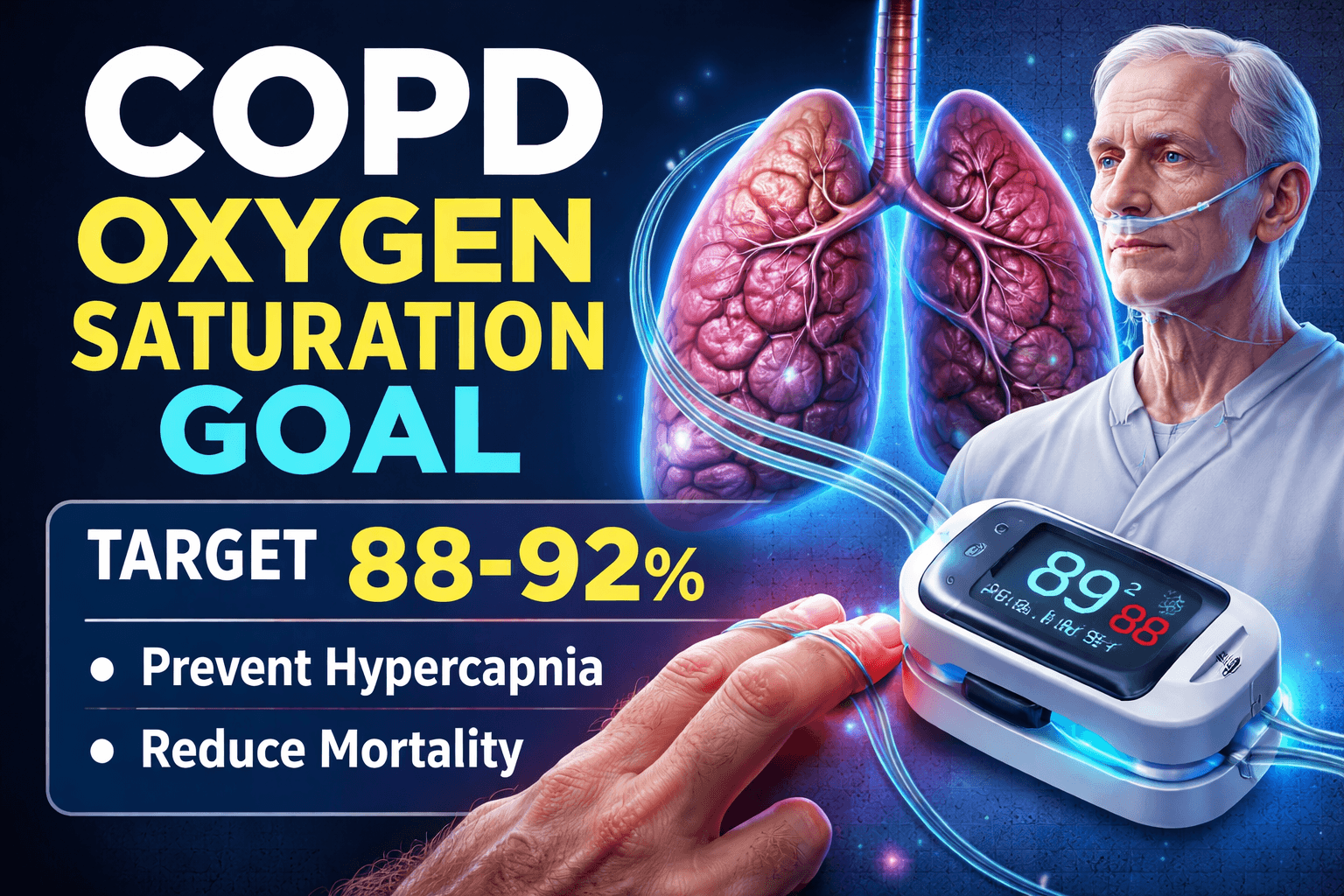
COPD Oxygen Saturation Target: When to Use 88–92%
Learn when the 88–92% oxygen target applies during a COPD exacerbation, what NICE and BTS guidance says, and when blood gas results should change the plan.
Evidence-based posts for clinicians and students covering ABG and VBG interpretation, breathwork, COPD, oxygenation, ventilation, and respiratory education.
Use the PulmTools blog to go deeper on the same topics covered in our calculators, simulators, and bedside tools, with practical clinical explanations and student-friendly breakdowns.
Jump straight from PulmTools articles into the calculators and simulators that match the same topic cluster. This makes the blog feel more like a clinical resource hub instead of a simple post archive.
Showing a compact tag index by default to keep the page clean.
309 tags available across the PulmTools blog.
High-value PulmTools content hubs and priority clinical guides.

Learn when the 88–92% oxygen target applies during a COPD exacerbation, what NICE and BTS guidance says, and when blood gas results should change the plan.

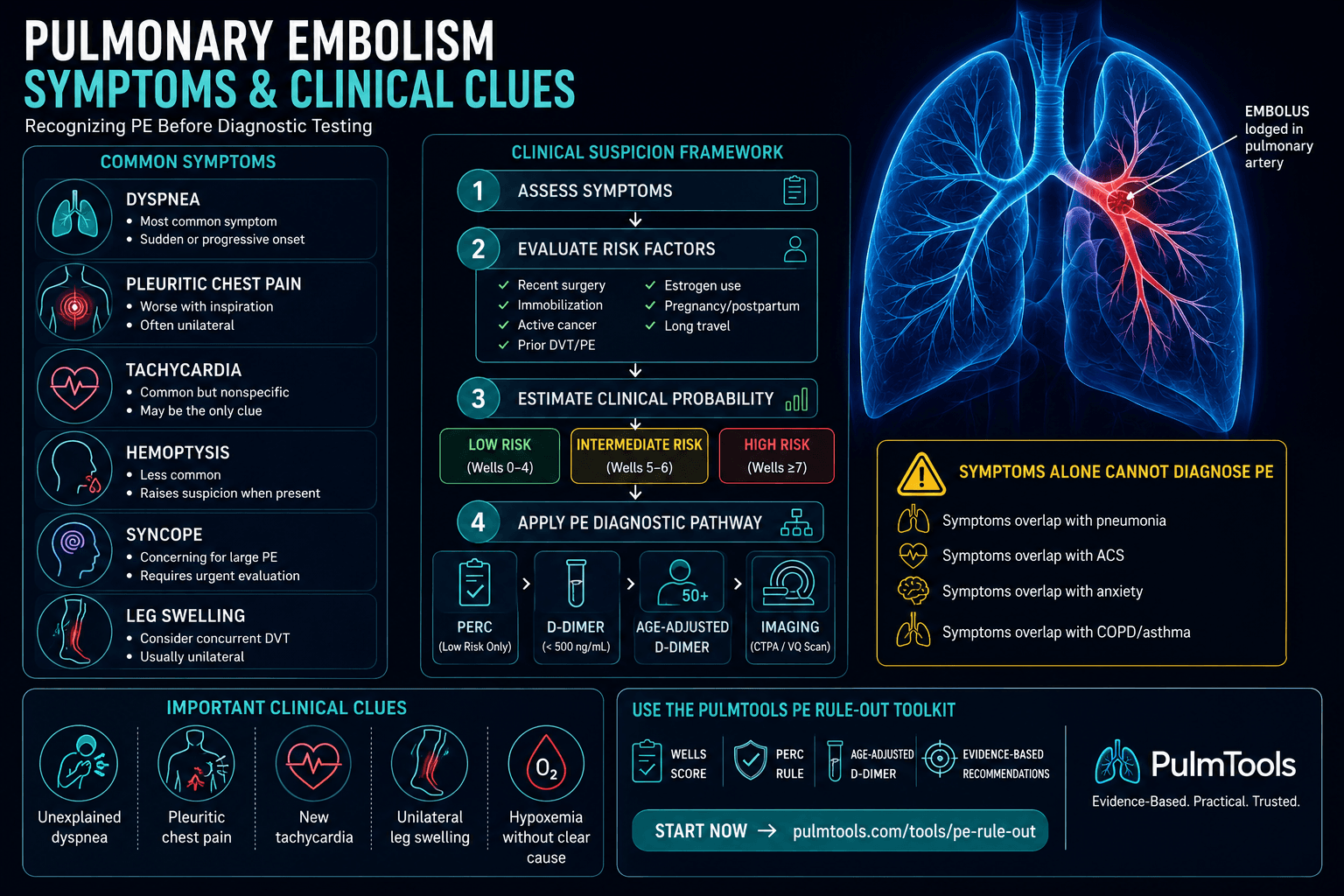
Learn common pulmonary embolism symptoms and clinical clues including dyspnea, pleuritic chest pain, tachycardia, hemoptysis, syncope, hypoxemia, unilateral leg swelling, and when to start formal PE evaluation.

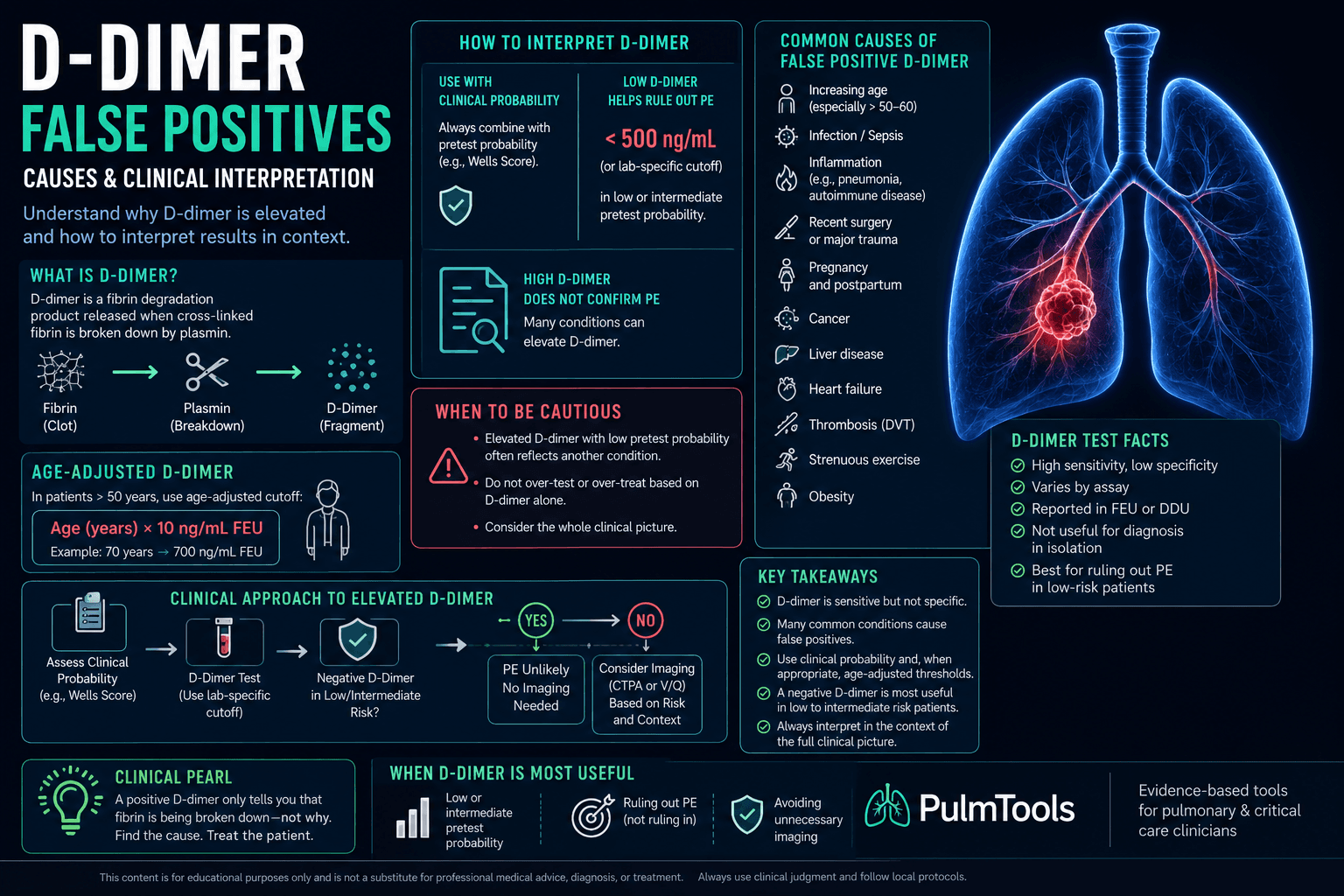
Learn common causes of false positive D-dimer including infection, inflammation, cancer, pregnancy, age, surgery, trauma, hospitalization, and how to interpret elevated D-dimer in pulmonary embolism workups.
Fresh clinical education, calculators, and respiratory strategy content.

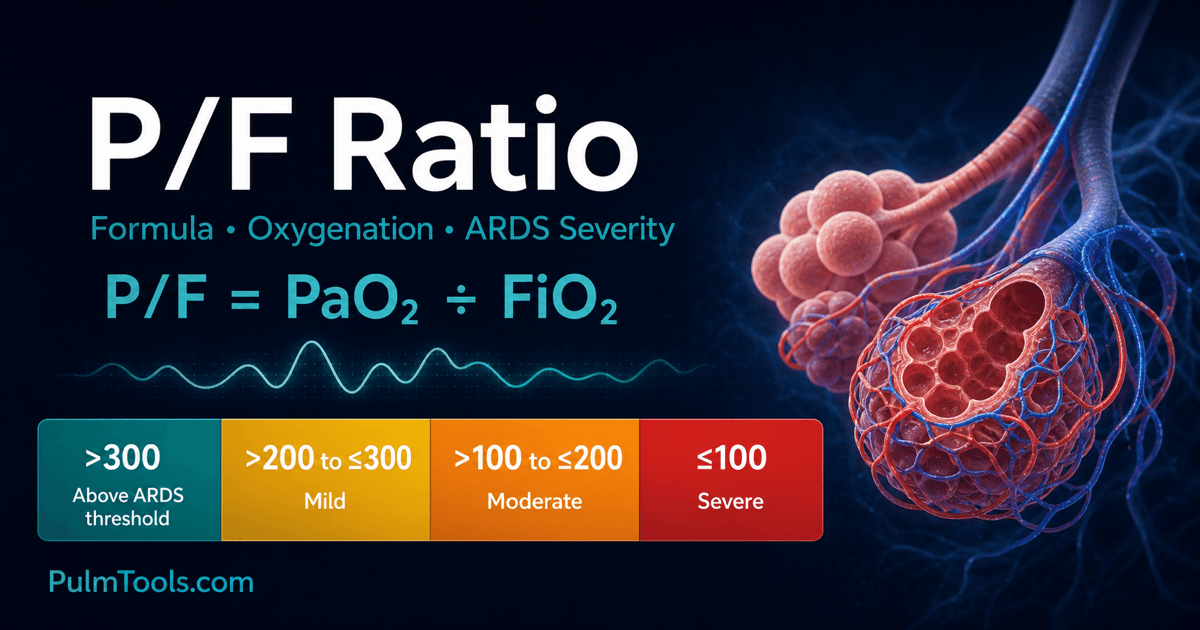
Calculate the P/F ratio from PaO₂ and FiO₂, review expected values, and interpret Berlin ARDS oxygenation thresholds with worked examples.

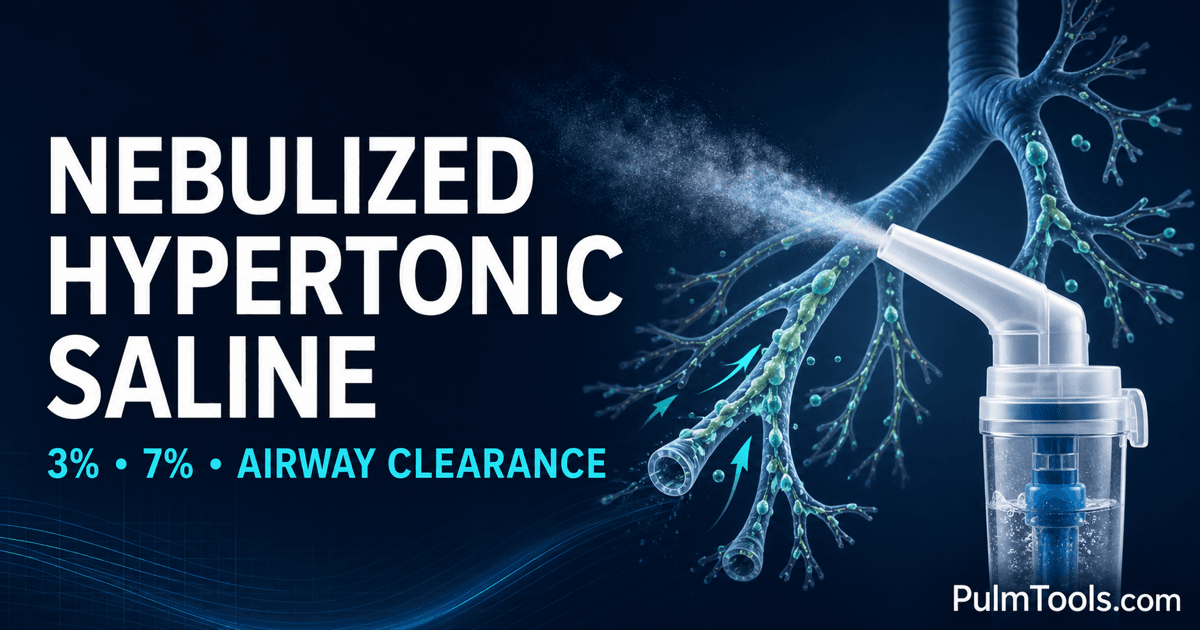
Compare 3% and 7% nebulized hypertonic saline, review bronchiectasis and cystic fibrosis guidance, and learn dosing examples, airway-clearance sequencing, and bronchospasm precautions.

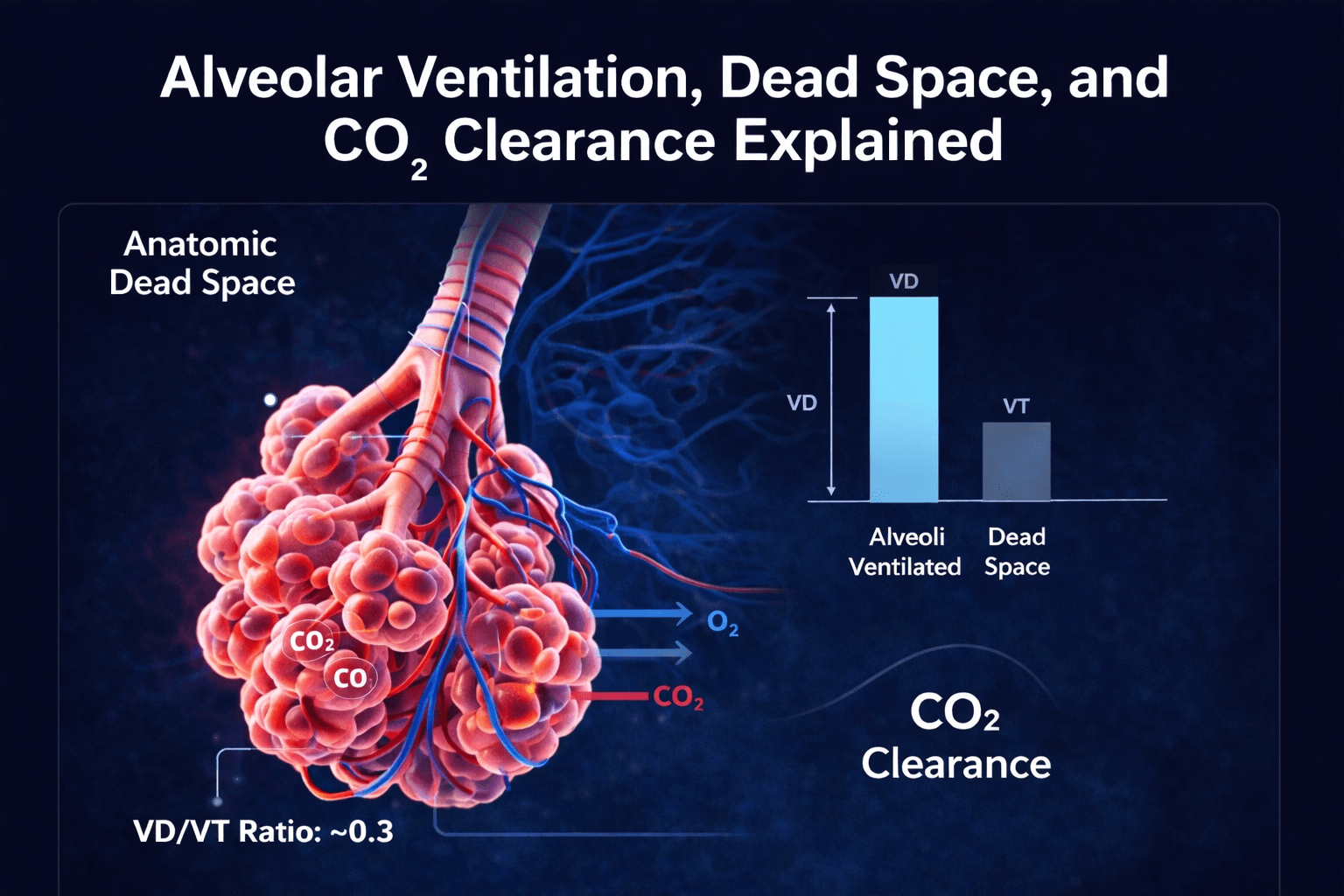
Learn how alveolar ventilation, anatomic dead space, and VD/VT ratio affect CO₂ clearance, bedside ventilation math, and ABG interpretation.

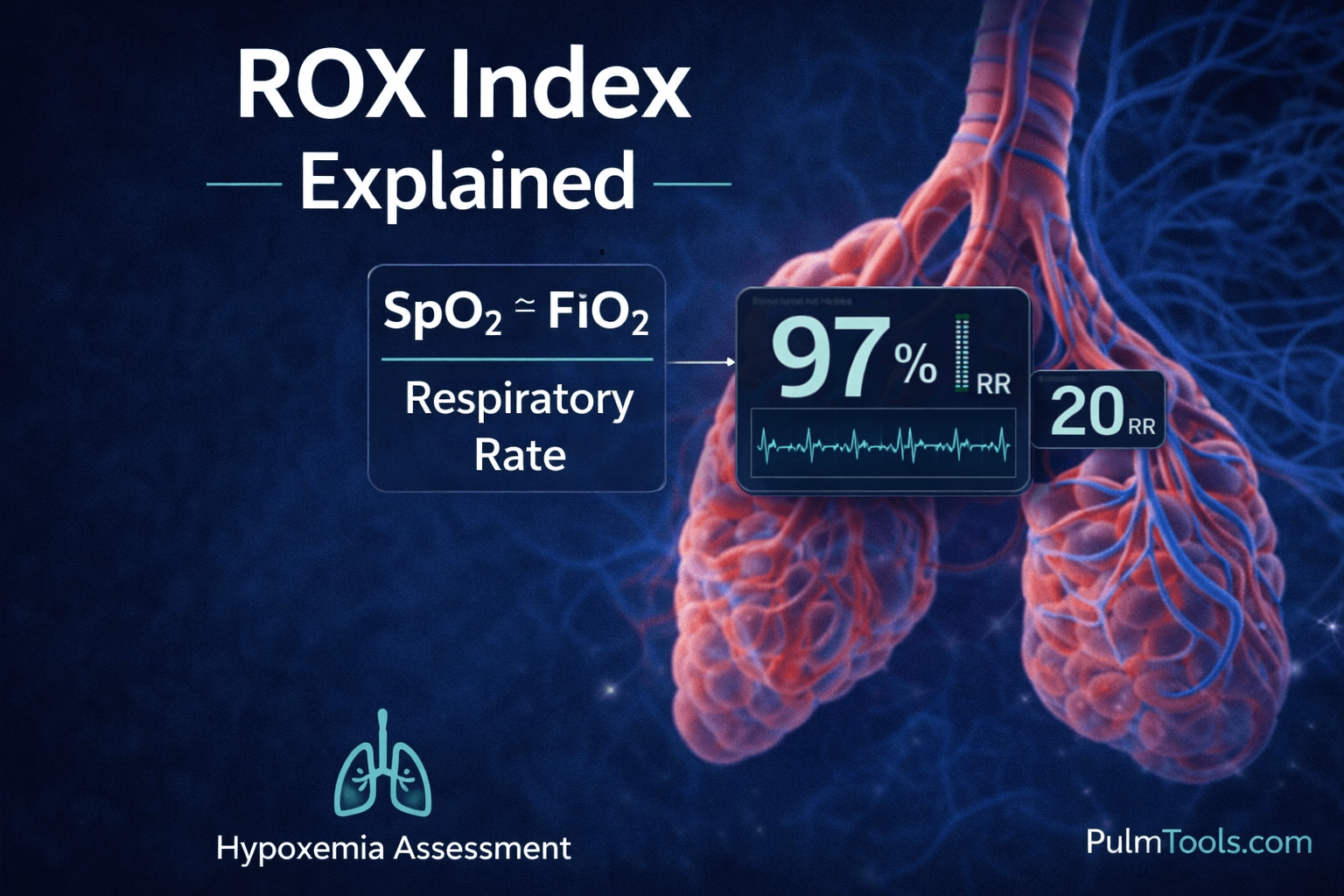
Learn how the ROX index helps assess HFNC response, estimate failure risk, and guide escalation decisions using SpO₂, FiO₂, and respiratory rate.

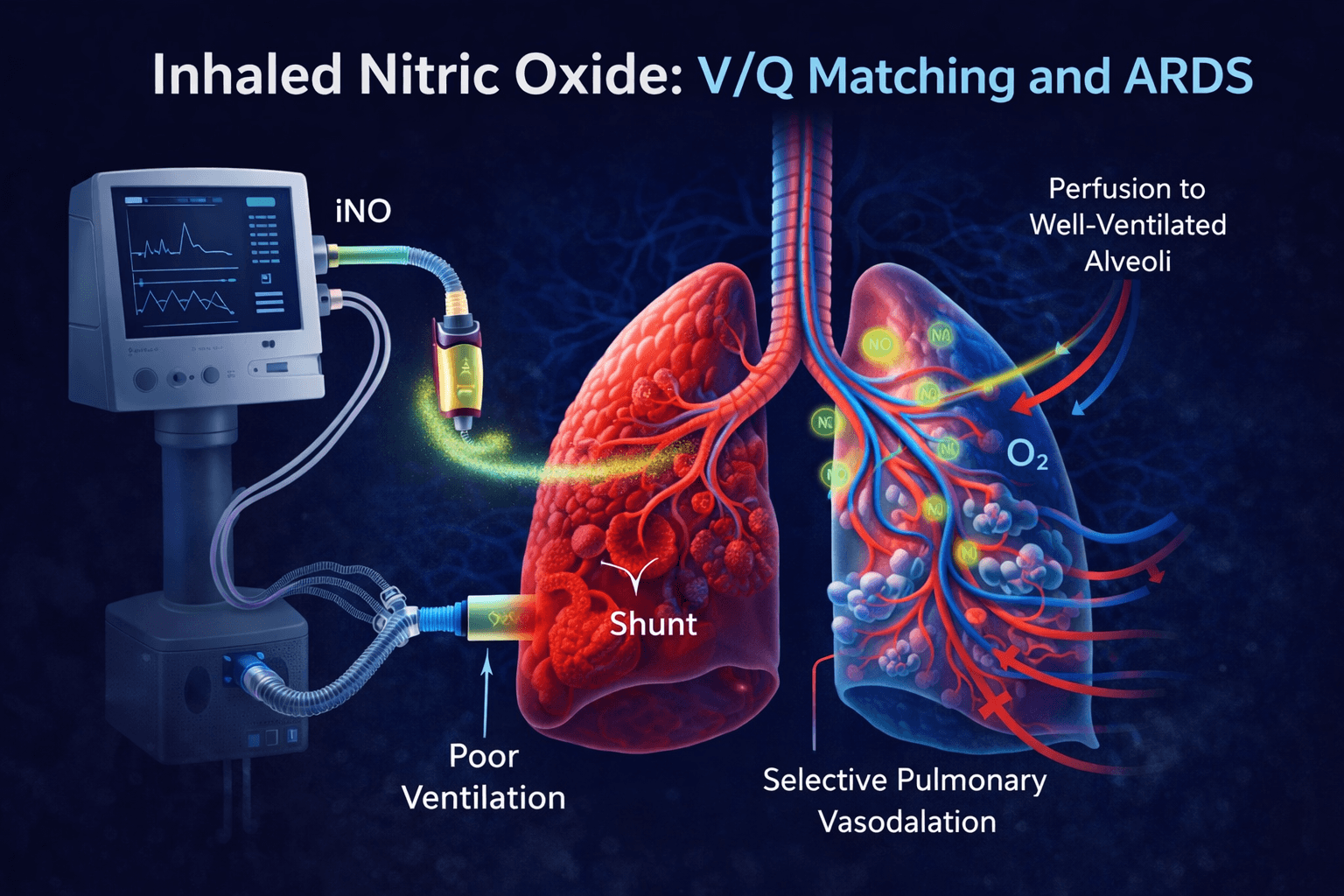
A clinician-focused guide to inhaled nitric oxide covering the one evidence-based indication, ARDS physiology, V/Q matching, and common off-label uses in critical care.

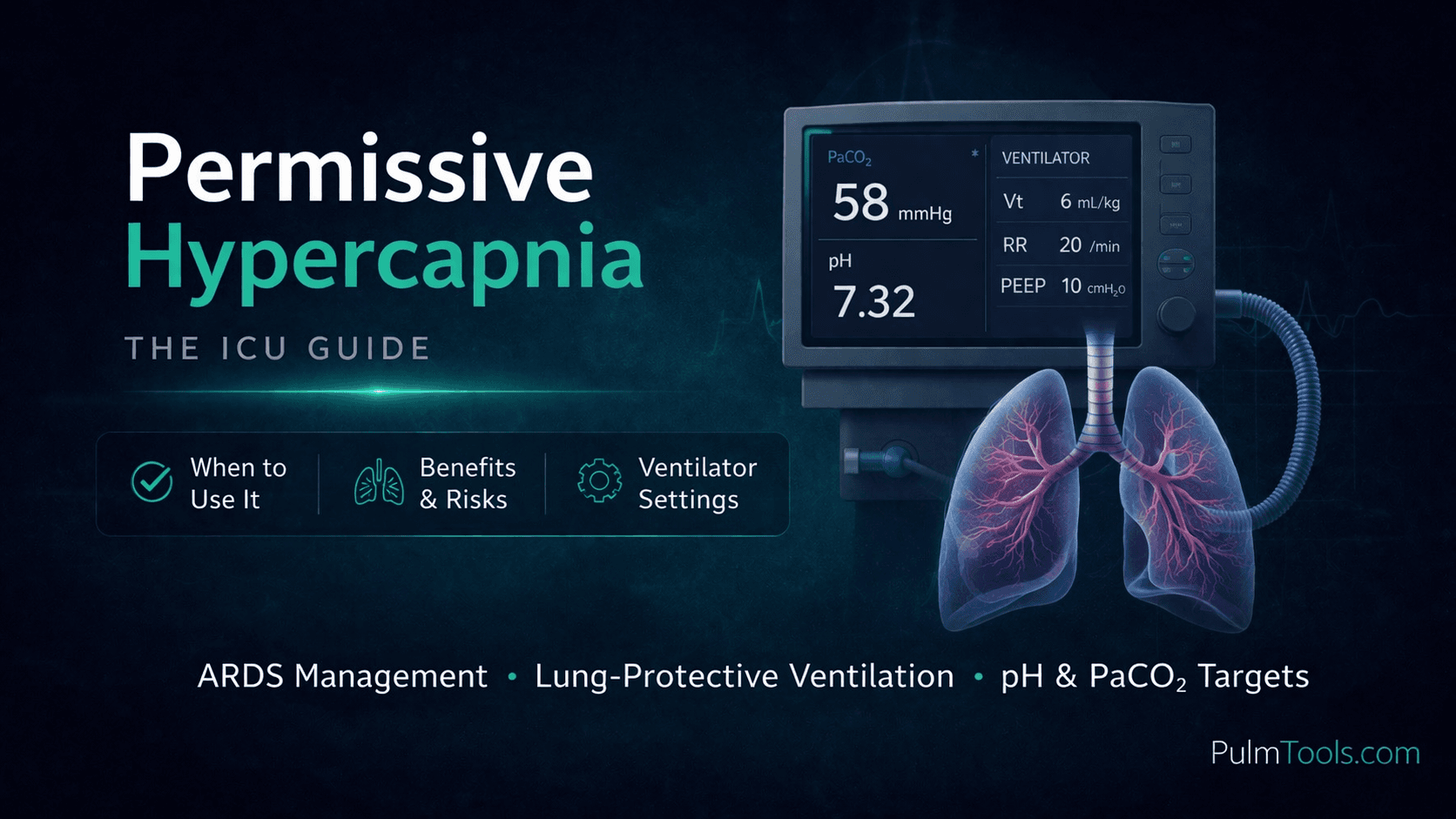
A practical ICU guide to permissive hypercapnia including pH thresholds, PaCO₂ targets, ventilator adjustments, risks, and ARDS lung-protective strategy.

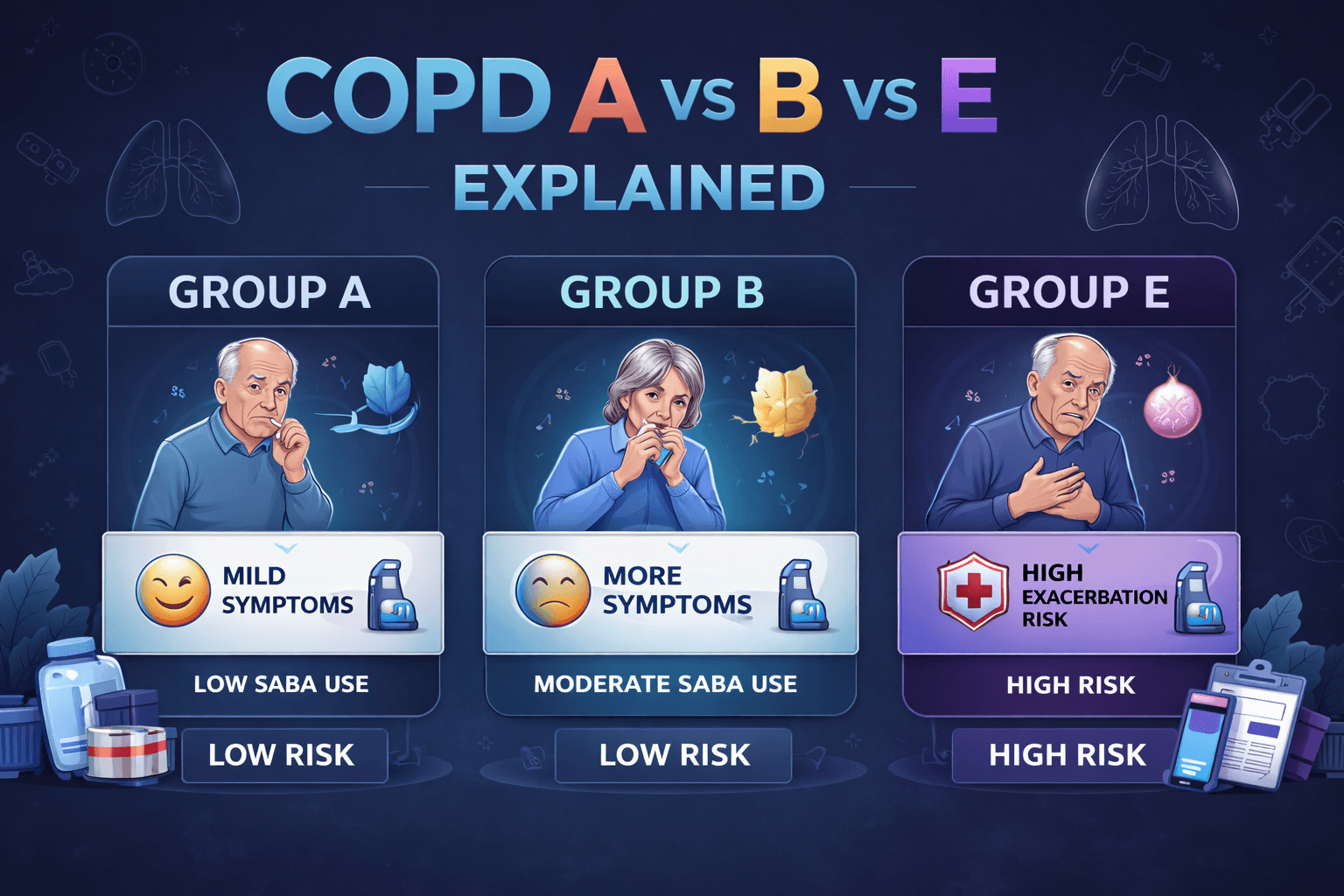
Understand COPD GOLD groups A, B, and E with symptoms, exacerbation risk, and treatment explained in a clear, step-by-step clinical guide.

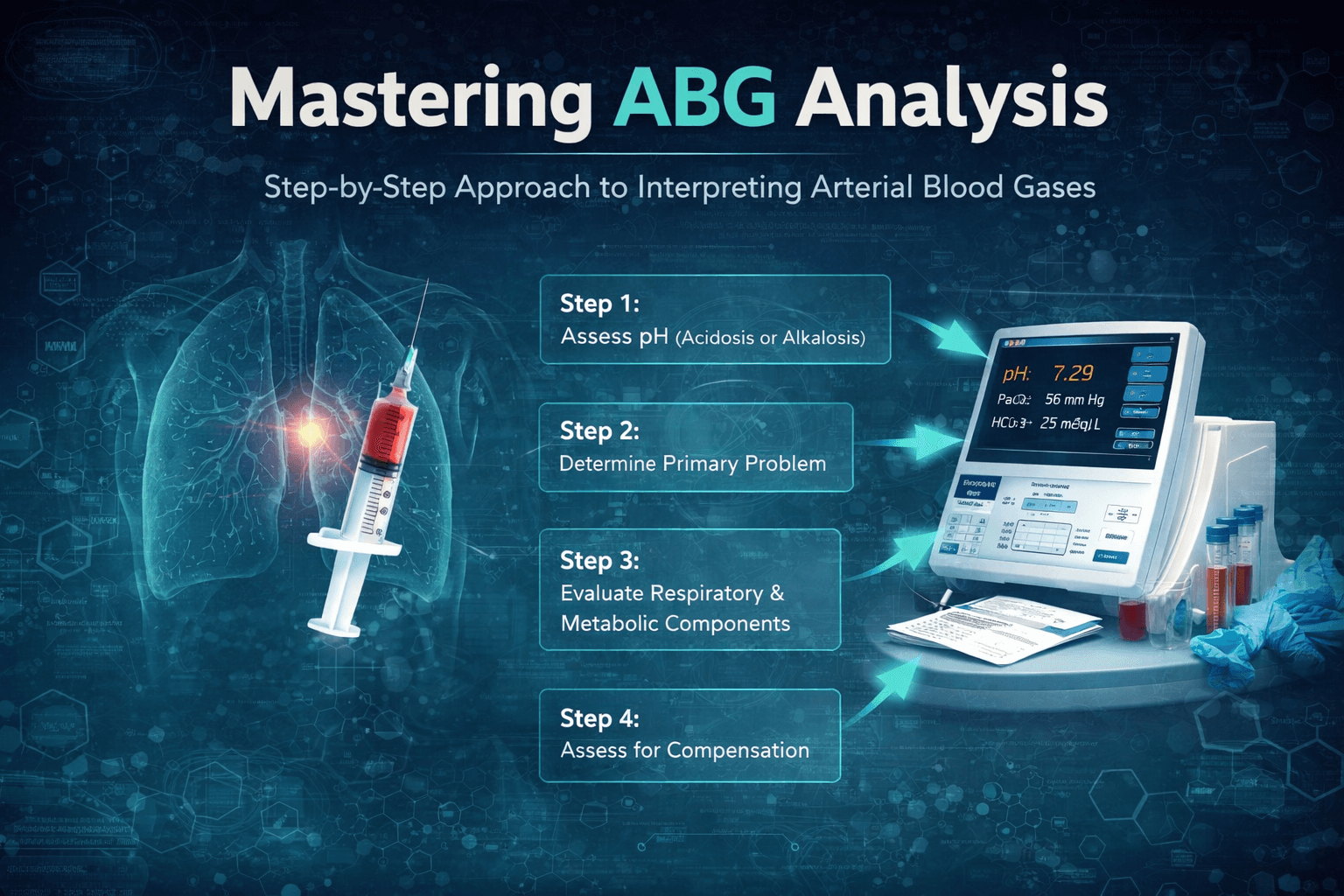
Master ABG analysis with a step-by-step guide covering pH, primary disorders, compensation, oxygenation, mixed acid-base disorders, and practice cases.

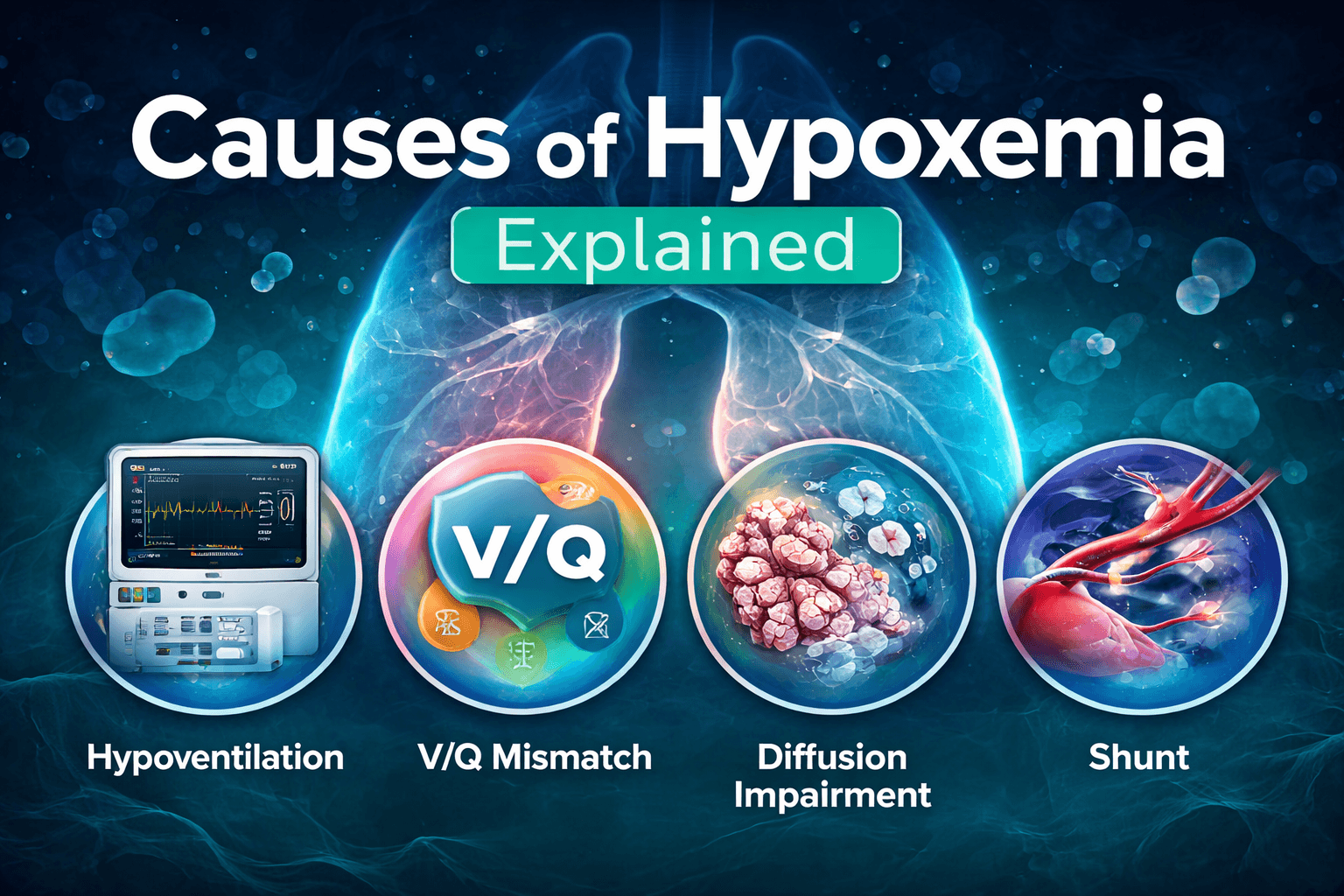
Learn the major causes of hypoxemia including V/Q mismatch, shunt, diffusion impairment, hypoventilation, and low FiO₂ with clear clinical explanations.

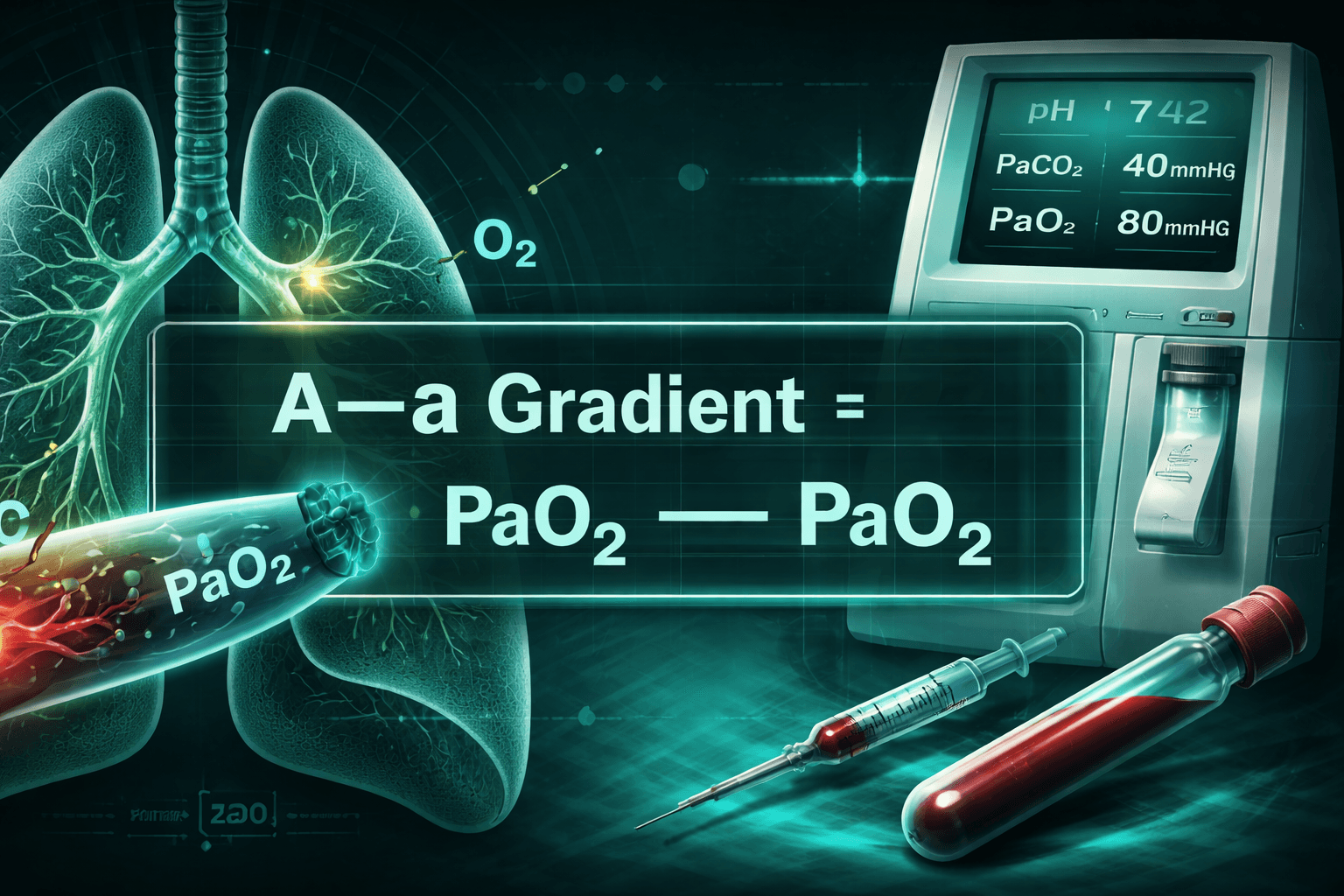
Learn how to calculate and interpret the A–a gradient, what is normal, and how it helps identify causes of hypoxemia like V/Q mismatch, shunt, and diffusion impairment.

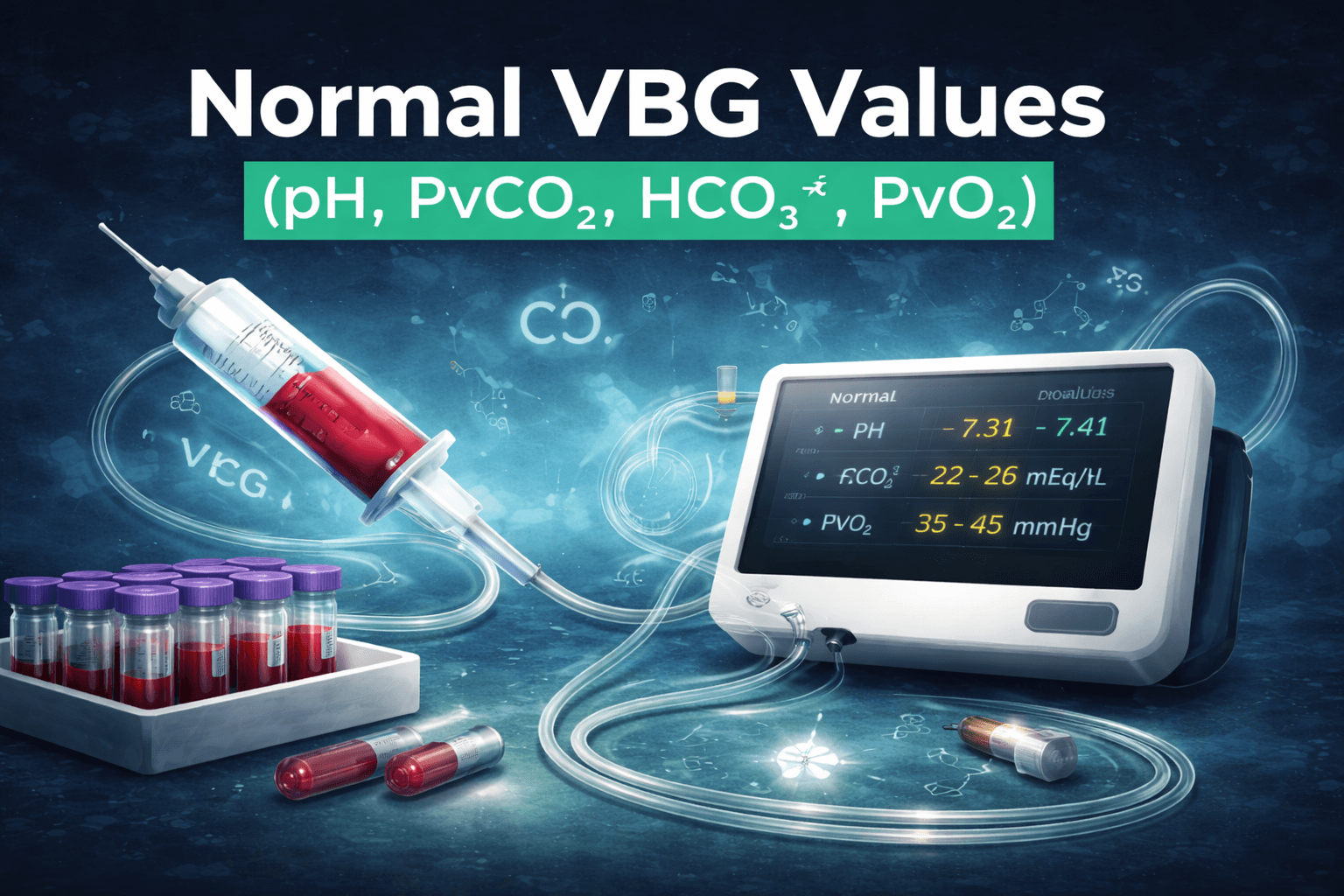
Normal VBG ranges for pH, PvCO₂, HCO₃⁻, and PvO₂, plus when VBG is useful and when ABG is required.

Learn how to interpret venous blood gases step-by-step, including normal values, acid-base interpretation, clinical use cases, and when ABG is required.