COPD · Controlled Oxygen · Hypercapnia
COPD Oxygen Saturation Target: When to Use 88–92%
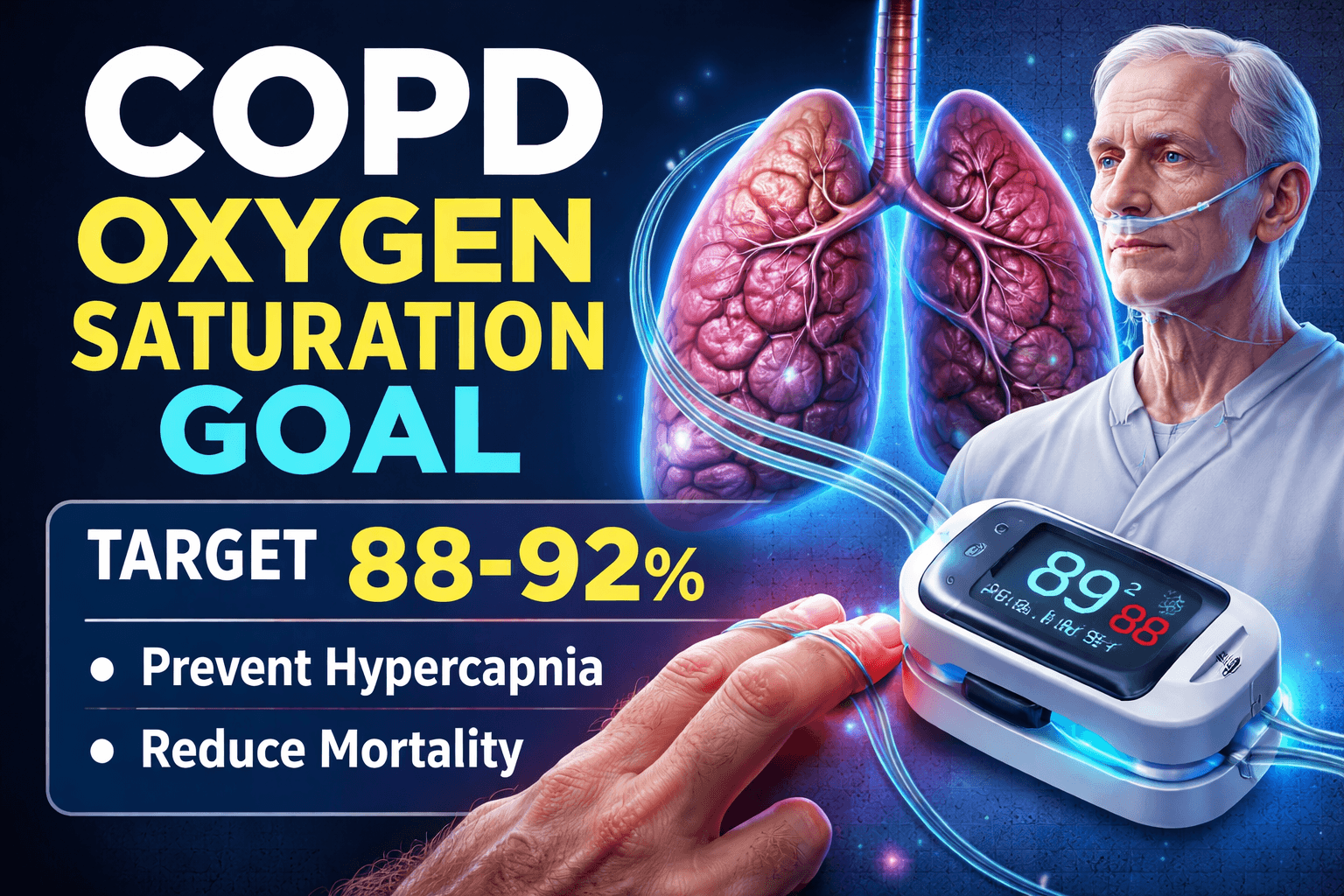
During an acute COPD exacerbation, controlled oxygen is commonly titrated to an SpO₂ of 88% to 92%, particularly when hypercapnic respiratory failure is possible. This is an initial safety range—not a universal permanent target for every person with COPD.
Quick answer: What SpO₂ should you target in COPD?
For an acute COPD exacerbation requiring emergency oxygen, target an SpO₂ of 88% to 92% while obtaining and reviewing blood gases. The purpose is to correct dangerous hypoxemia without producing avoidable hyperoxia in a patient who may retain carbon dioxide.
Do not withhold oxygen from a severely hypoxemic patient. Start controlled oxygen, monitor the response, obtain blood gases when indicated, and follow the prescribed patient-specific range.
The key distinction
COPD alone does not make 88–92% the lifelong target. The range is most relevant during acute illness or when hypercapnic respiratory failure is a concern. Baseline saturation, previous blood gases, the current gas, and an individualized oxygen alert card or order can change the plan.
Which COPD oxygen saturation target applies?
The setting matters. This table separates the frequently quoted acute-care range from reassessment after blood gases and from long-term home oxygen decisions.
| Clinical situation | Initial target | How to interpret it |
|---|---|---|
| Acute COPD exacerbation receiving emergency oxygen | 88–92% | NICE recommends maintaining this range during an acute exacerbation when emergency oxygen is required. |
| Known COPD or other risk of hypercapnic respiratory failure | 88–92% pending blood gas results | BTS guidance supports controlled oxygen in this range until PaCO₂ and pH are known. |
| Normal or low PaCO₂ without prior hypercapnic respiratory failure | Reassess after the blood gas | The clinical team may prescribe a different range after reviewing the gas, baseline saturation, and current illness. |
| Stable COPD or long-term oxygen therapy assessment | Individualized | Home oxygen eligibility and flow are separate decisions based on stable measurements and formal assessment. |
What COPD oxygen guidelines say about 88–92%
NICE: emergency oxygen during an acute exacerbation
NICE states that people receiving emergency oxygen during an acute COPD exacerbation should have oxygen saturation maintained between 88% and 92%. Its broader COPD recommendations also call for oxygen to be prescribed to an individualized target range.
Sources: NICE Quality Statement 6 and NICE COPD recommendations
BTS: use controlled oxygen pending blood gas results
The British Thoracic Society recommends 88–92% pending blood gas results for most patients with known COPD or another risk factor for hypercapnic respiratory failure. After the blood gas, the prescribed range may be revised when PaCO₂ is normal and there is no history of hypercapnic respiratory failure.
Source: BTS oxygen guideline
GOLD: keep acute and long-term oxygen decisions separate
GOLD provides the broader framework for COPD diagnosis, exacerbation management, and long-term oxygen therapy. Long-term oxygen is assessed using stable clinical measurements and formal eligibility criteria; it should not be inferred from an emergency 88–92% target alone.
Why can excessive oxygen worsen hypercapnia in COPD?
The explanation is more complex than the familiar phrase “loss of hypoxic drive.” Several mechanisms can act together, and their importance varies between patients.
Ventilation-perfusion mismatch
Oxygen can reduce hypoxic pulmonary vasoconstriction, increasing perfusion of poorly ventilated lung units and impairing carbon dioxide elimination.
Haldane effect
As hemoglobin becomes more oxygenated, it carries less carbon dioxide. The displaced CO₂ can contribute to a rising PaCO₂.
Reduced minute ventilation
Ventilation may decrease in some oxygen-sensitive patients, but this is usually only part of the physiology—not the complete explanation.
A randomized prehospital trial found lower mortality with titrated oxygen than with routine high-flow oxygen in suspected COPD exacerbations. That evidence supports controlled delivery and close reassessment rather than withholding needed oxygen. See the BMJ trial.
How clinicians titrate oxygen during a COPD exacerbation
1. Treat significant hypoxemia
Start an appropriate controlled-oxygen device. Severe hypoxemia is dangerous; concern about hypercapnia is not a reason to leave it untreated.
2. Aim for the prescribed range
Use 88–92% when acute COPD or hypercapnia risk makes that the appropriate initial range. Avoid large unmonitored increases in oxygen concentration.
3. Reassess the whole patient
Follow respiratory rate, work of breathing, mental status, hemodynamics, oxygen requirement, and the direction of change—not the pulse-oximeter number alone.
4. Obtain blood gases when indicated
An ABG measures PaO₂, PaCO₂, and pH. A venous gas can provide useful pH and ventilation information in selected settings, but it does not measure arterial oxygenation or replace PaO₂.
5. Escalate ventilatory support when needed
Rising PaCO₂ with respiratory acidosis, fatigue, deteriorating mental status, or persistent distress may require noninvasive or invasive ventilatory support—not simply more oxygen.
When does a COPD patient receiving oxygen need an ABG?
Pulse oximetry estimates oxygen saturation but cannot reveal PaCO₂ or pH. Blood gas assessment becomes particularly important with increasing oxygen requirements, severe or worsening dyspnea, drowsiness, confusion, prior hypercapnic respiratory failure, or concern for acute respiratory acidosis.
Oxygenation and ventilation are different problems
A patient can display an acceptable SpO₂ while PaCO₂ and acidosis worsen. Pair the bedside assessment with the ABG interpretation guide or use the PulmTools ABG Analyzer for educational practice.
Emergency oxygen versus long-term home oxygen
Acute exacerbation
The immediate goal is safe correction of hypoxemia while the team assesses PaCO₂, pH, response to therapy, and the need for ventilatory support. This is where the 88–92% range is most often quoted.
Stable home assessment
Long-term oxygen therapy is considered after formal assessment in a stable state. Eligibility, flow, hours of use, and follow-up are separate from an emergency saturation target.
Clinical examples
Exacerbation with SpO₂ 84% on room air
Controlled oxygen is started and titrated into the prescribed range while bronchodilator treatment, blood gases, and the cause of deterioration are addressed. Chasing 99% is not the immediate goal when hypercapnia risk is present.
Saturation improves, but drowsiness develops
A reassuring SpO₂ does not exclude worsening ventilatory failure. The patient needs urgent reassessment, blood gas evaluation, and consideration of ventilatory support rather than an SpO₂-only decision.
Frequently asked questions
What is the target oxygen saturation during a COPD exacerbation?
For an acute COPD exacerbation, controlled oxygen is commonly titrated to an SpO₂ of 88% to 92% while blood gas results are obtained, especially when hypercapnic respiratory failure is possible. The treating team should individualize the final target.
Why is the COPD oxygen target often 88% to 92%?
The range is intended to correct clinically important hypoxemia while limiting unnecessary hyperoxia. In susceptible patients, excessive oxygen can worsen carbon dioxide retention through ventilation-perfusion changes, the Haldane effect, and sometimes reduced ventilation.
Is an oxygen saturation of 88% too low for someone with COPD?
Not necessarily. An SpO₂ of 88% can be the lower boundary of an intentional acute-care target for a patient at risk of hypercapnic respiratory failure. A falling saturation, severe symptoms, or a value below the prescribed range still requires prompt clinical assessment.
Should every person with COPD be kept at 88% to 92%?
No. The 88% to 92% range is not a universal permanent target for every person with COPD. Blood gas results, previous hypercapnic respiratory failure, the current illness, baseline saturation, and a patient-specific oxygen prescription may support a different target.
When should an ABG be checked in a COPD patient receiving oxygen?
An arterial blood gas is important when hypercapnia or acidosis is suspected, oxygen needs are increasing, mental status is changing, work of breathing is worsening, or ventilatory failure is a concern. Pulse oximetry cannot measure PaCO₂ or pH.
Does the 88% to 92% target apply to long-term oxygen at home?
Not automatically. Emergency oxygen targets and long-term oxygen therapy are different decisions. Home oxygen eligibility and the prescribed flow rate require a formal assessment based on stable measurements and the applicable clinical guideline.
Bottom line
In an acute COPD exacerbation, an SpO₂ target of 88–92% helps balance correction of hypoxemia with the risk of oxygen-induced hypercapnia. It is an initial, context-dependent range. Use blood gases, clinical trajectory, previous hypercapnic history, and the patient-specific prescription to determine the final target.
Guidelines and references
- 1.NICE: Quality statement 6: Emergency oxygen during an exacerbation
- 2.NICE: COPD in over 16s: diagnosis and management — recommendations
- 3.British Thoracic Society: Guideline for oxygen use in adults in healthcare and emergency settings
- 4.BTS/ICS: Guideline for ventilatory management of acute hypercapnic respiratory failure
- 5.BMJ: Effect of high-flow oxygen on mortality in COPD exacerbations
- 6.GOLD: 2026 GOLD Report and Pocket Guide
This page is educational and does not replace patient-specific assessment, local protocols, an oxygen prescription, or emergency medical care.