COPD A vs B vs E Explained (GOLD 2025 Groups)
Understand COPD GOLD groups A, B, and E with a clear, step-by-step breakdown of symptoms, exacerbation risk, and treatment strategy. This guide simplifies modern COPD classification beyond spirometry.
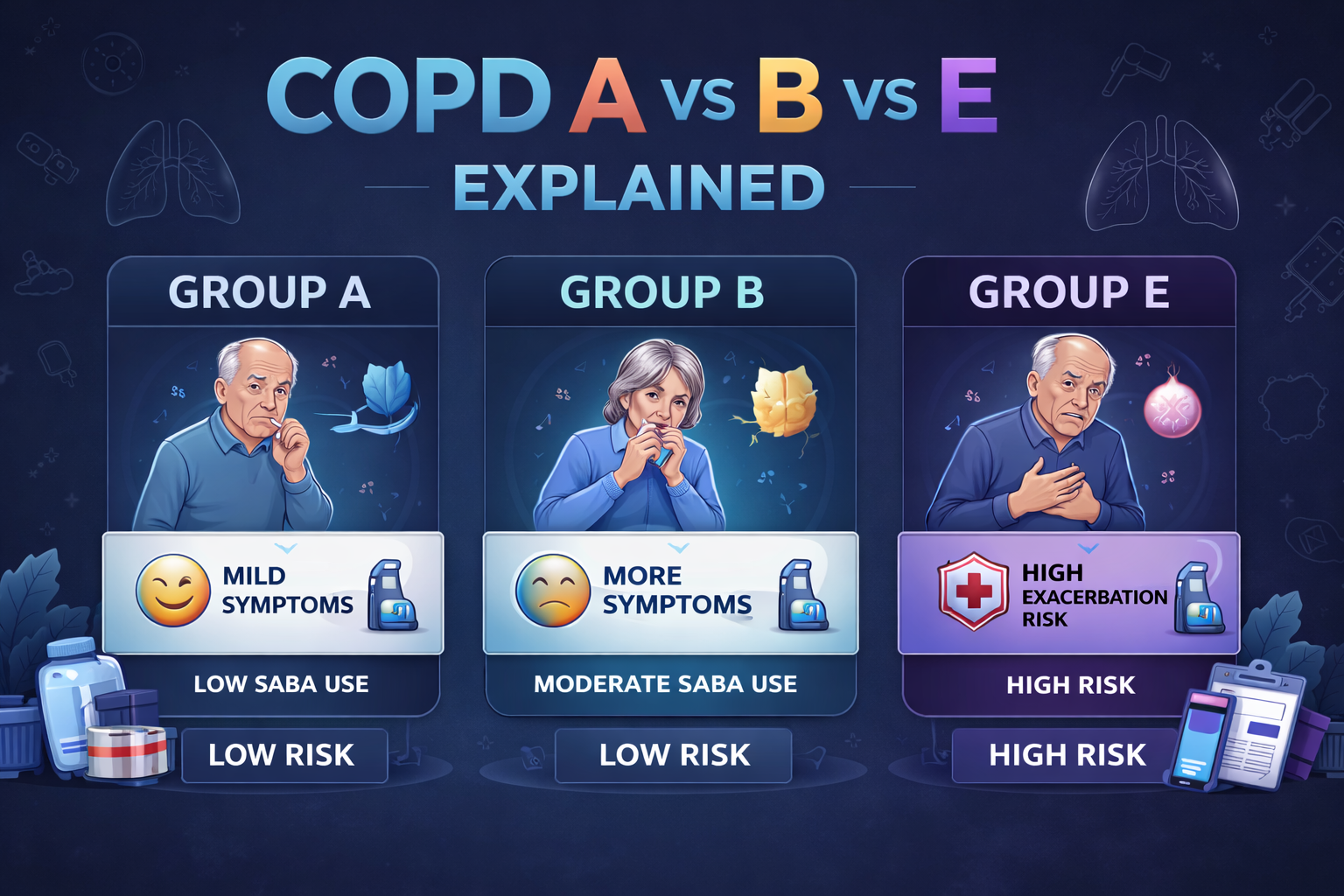
Quick Summary
- Group A: Low symptoms + low exacerbation risk
- Group B: High symptoms + low exacerbation risk
- Group E: High exacerbation risk (regardless of symptoms)
- Modern COPD treatment is based on symptoms + exacerbations, not just FEV₁
What are COPD GOLD Groups?
The GOLD (Global Initiative for Chronic Obstructive Lung Disease) system classifies COPD patients into Groups A, B, and E based on:
- Symptom burden (CAT or mMRC)
- Exacerbation history
This replaces the older ABCD system and better predicts outcomes and treatment needs.
Group A (Low Risk, Low Symptoms)
- Few symptoms (low CAT / mMRC)
- 0–1 exacerbations (no hospitalization)
- Minimal functional limitation
Treatment typically starts with a single bronchodilator.
Group B (Low Risk, High Symptoms)
- Significant dyspnea or activity limitation
- 0–1 exacerbations (no hospitalization)
Typically treated with LABA + LAMA dual bronchodilator therapy.
Group E (High Exacerbation Risk)
- ≥2 exacerbations OR ≥1 hospitalization
- Symptoms may vary
High-risk patients often require LABA + LAMA, and sometimes ICS depending on eosinophils.
Why This Matters Clinically
- Guides initial inhaler therapy
- Predicts exacerbation risk
- Improves patient outcomes