ABG Compensation & Acid-Base
Respiratory Compensation Explained (Acute vs Chronic)
· ~8 min read
Respiratory compensation is one of the most important concepts in ABG interpretation. It tells you whether the kidneys are responding appropriately to changes in CO₂ — and more importantly, whether a mixed acid-base disorder is present.
This page connects directly with the ABG Interpretation Guide, Winter's Formula, and Mixed Acid-Base Disorders.
Compensation Rules (High-Yield Tables)
Respiratory Acidosis
| Type | PaCO₂ Change | HCO₃⁻ Change |
|---|---|---|
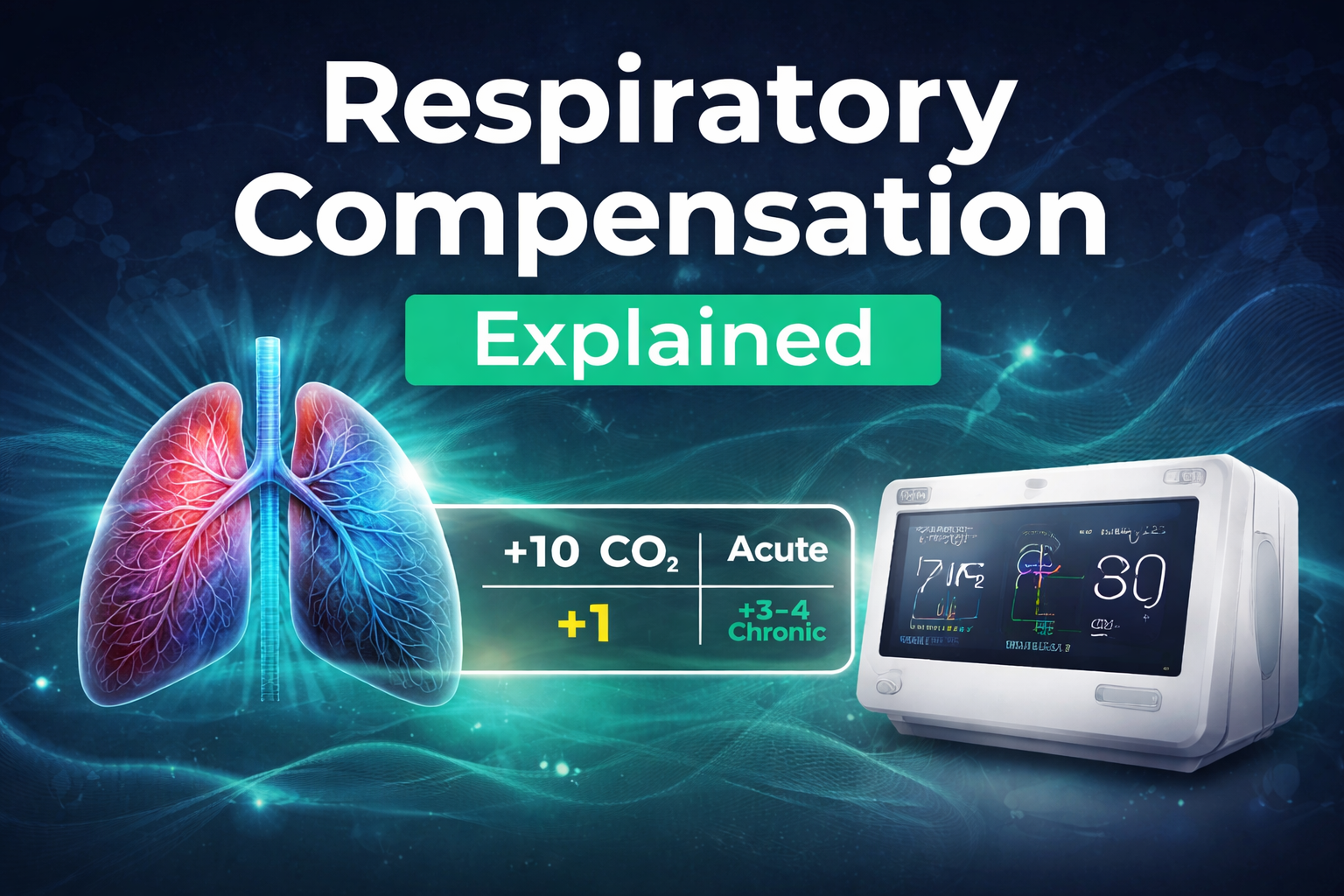
| Acute | +10 | +1 |
| Chronic | +10 | +3–4 |
Respiratory Alkalosis
| Type | PaCO₂ Change | HCO₃⁻ Change |
|---|---|---|
| Acute | -10 | -2 |
| Chronic | -10 | -4–5 |
Acute vs Chronic: Why It Matters
The difference between acute and chronic respiratory disorders comes down to time.
- Acute: kidneys haven't had time to compensate
- Chronic: kidneys retain or excrete bicarbonate
How to Use This on an ABG
- Identify primary disorder
- Check expected compensation
- Compare to actual HCO₃⁻
- Decide if mixed disorder exists
This step is critical when working through a full ABG interpretation or identifying mixed disorders.
Worked Example
ABG: pH 7.30 / PaCO₂ 60 / HCO₃⁻ 26
CO₂ is elevated → respiratory acidosis. Expected acute compensation = +2 HCO₃⁻. This fits → acute respiratory acidosis.