Oxygenation & Gas Exchange
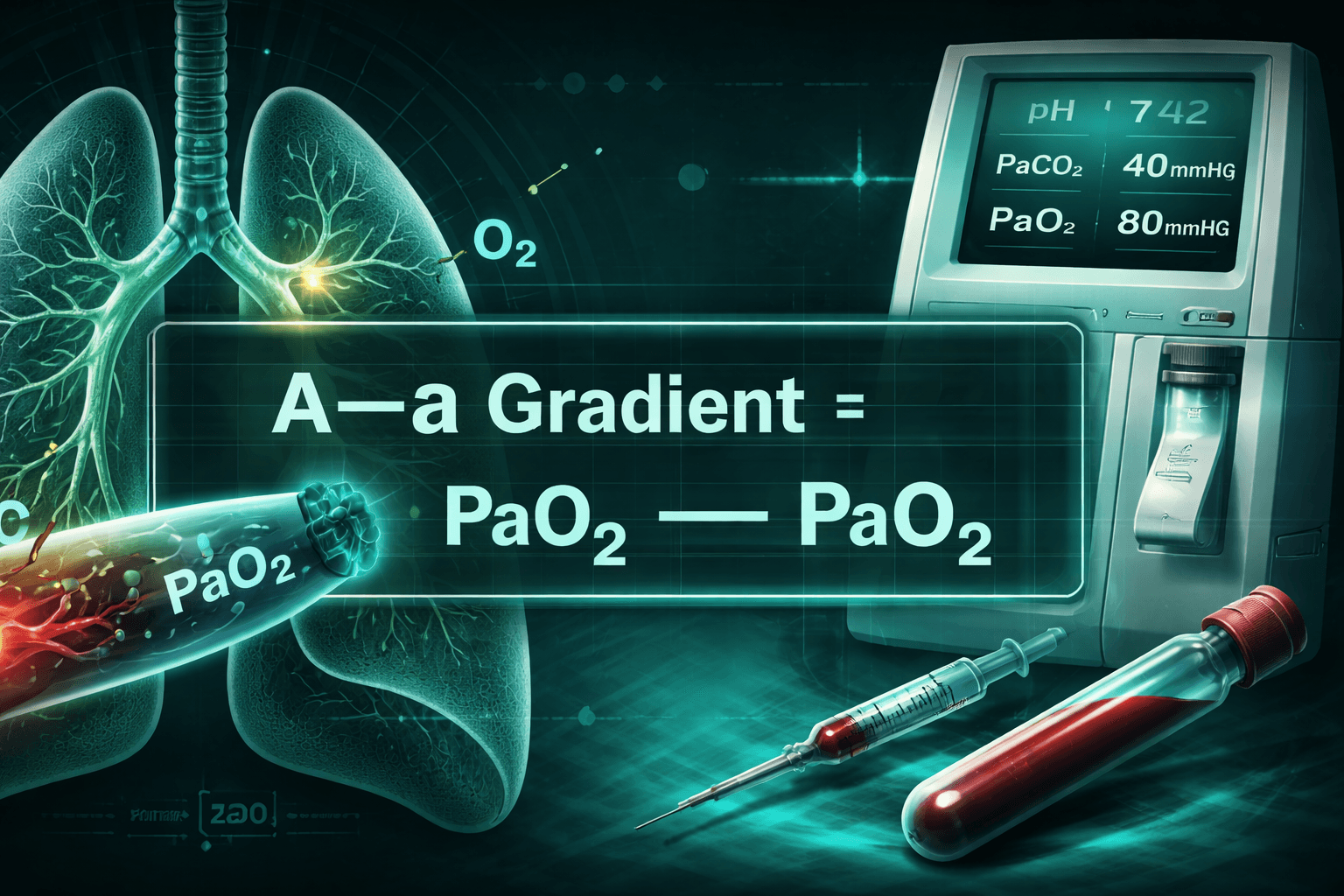
A–a Gradient Explained: Alveolar-Arterial Oxygen Difference
Learn how to calculate and interpret the A–a gradient step by step, what a normal A–a gradient looks like, and how it helps you separate hypoventilation from true gas exchange problems like V/Q mismatch, shunt, and diffusion impairment.
What Is the A–a Gradient?
The A–a gradient is the difference between alveolar oxygen (PAO₂) and arterial oxygen (PaO₂). It is one of the most useful bedside tools for evaluating the cause of hypoxemia.
In simple terms, it helps answer a key question: is the low oxygen caused by poor ventilation, or is there a real oxygen transfer problem in the lungs?
For a broader oxygenation overview, pair this page with our P/F Ratio guide. For full acid-base interpretation, see the ABG Step-by-Step Guide.
A–a Gradient Formula
To calculate alveolar oxygen, use the alveolar gas equation:
At sea level on room air, many clinicians use standard assumptions for atmospheric pressure, water vapor pressure, and respiratory quotient.
How to Calculate the A–a Gradient Step by Step
1. Determine FiO₂
Identify the inspired oxygen concentration. On room air, FiO₂ is 0.21.
2. Calculate PAO₂
Use the alveolar gas equation to estimate alveolar oxygen.
3. Measure PaO₂ from the ABG
Take the arterial oxygen tension directly from the blood gas.
4. Subtract PaO₂ from PAO₂
The result is the A–a gradient. Then compare it with the expected normal range for age.
Normal A–a Gradient
A normal A–a gradient increases with age. A common bedside estimate is:
Reference ranges vary slightly by lab and clinical context, but this rule is a useful quick estimate.
What an Elevated A–a Gradient Means
- V/Q mismatch
- Shunt physiology
- Diffusion impairment
- Parenchymal lung disease
An elevated gradient suggests oxygen is not moving effectively from the alveoli into arterial blood.
How to Interpret the A–a Gradient
Suggests hypoxemia is more likely due to hypoventilationor low inspired oxygen rather than a major gas exchange defect.
Suggests a true oxygen transfer problem such as V/Q mismatch, shunt, or diffusion impairment.
Worked Clinical Examples
Example 1: Normal A–a Gradient
PaO₂ 62 mmHg on room air, PaCO₂ 60 mmHg, age 28
A patient with hypoventilation can have hypoxemia but still maintain a near-normal A–a gradient. This points away from a major gas exchange defect and toward reduced ventilation.
Example 2: Elevated A–a Gradient
PaO₂ 58 mmHg on room air, PaCO₂ 32 mmHg, age 54
When the A–a gradient is elevated despite a low PaCO₂, the problem is more likely impaired oxygen transfer such as V/Q mismatch, shunt, or diffusion limitation.
A–a Gradient vs P/F Ratio
| Feature | A–a Gradient | P/F Ratio |
|---|---|---|
| Primary use | Cause of hypoxemia | Severity of hypoxemia |
| Best for | Diagnostic reasoning | ARDS classification |
| Pairs well with | ABG interpretation | Ventilator and oxygenation tracking |
For best results, use both together. The A–a gradient helps explain why oxygenation is low, while the P/F ratio helps describe how severe it is.
Use the A–a Gradient Calculator
Use the PulmTools A–a gradient calculator to estimate alveolar oxygen, compare it with arterial oxygen, and evaluate whether hypoxemia is due to hypoventilation or impaired gas exchange.