Clinical
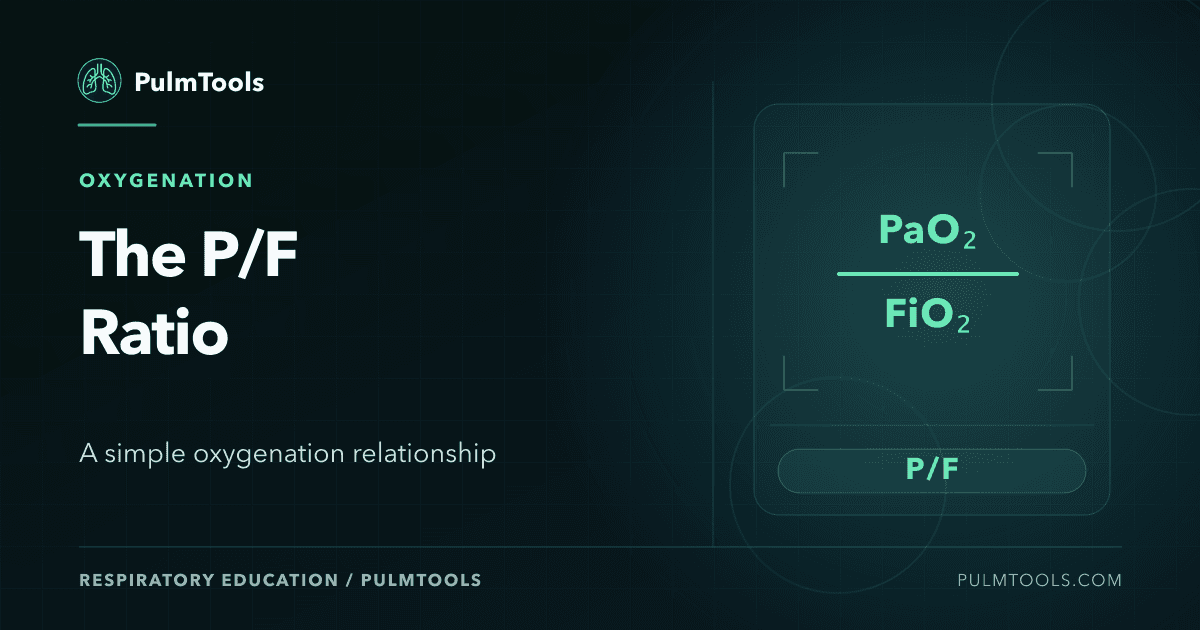
P/F Ratio: Formula, Normal Range & ARDS Chart
Calculate the P/F ratio from PaO₂ and FiO₂, review expected values, and interpret Berlin ARDS oxygenation thresholds with worked examples.
8 min readRead article
Clear, practical guides for the decisions behind respiratory care. Explore blood gases, oxygenation, ventilation, and more.
Guides for clinicians, respiratory therapists, and students.
12 articles found for “oxygenation”.
Calculate the P/F ratio from PaO₂ and FiO₂, review expected values, and interpret Berlin ARDS oxygenation thresholds with worked examples.
Learn the difference between oxygenation and ventilation, how PaO₂, SpO₂, PaCO₂, and pH guide ABG interpretation, and which PulmTools calculators help at the bedside.
Learn how to interpret preductal and postductal oxygen saturation differences in newborns, identify ductal shunting patterns, recognize PPHN physiology, and apply CCHD screening context at the bedside.
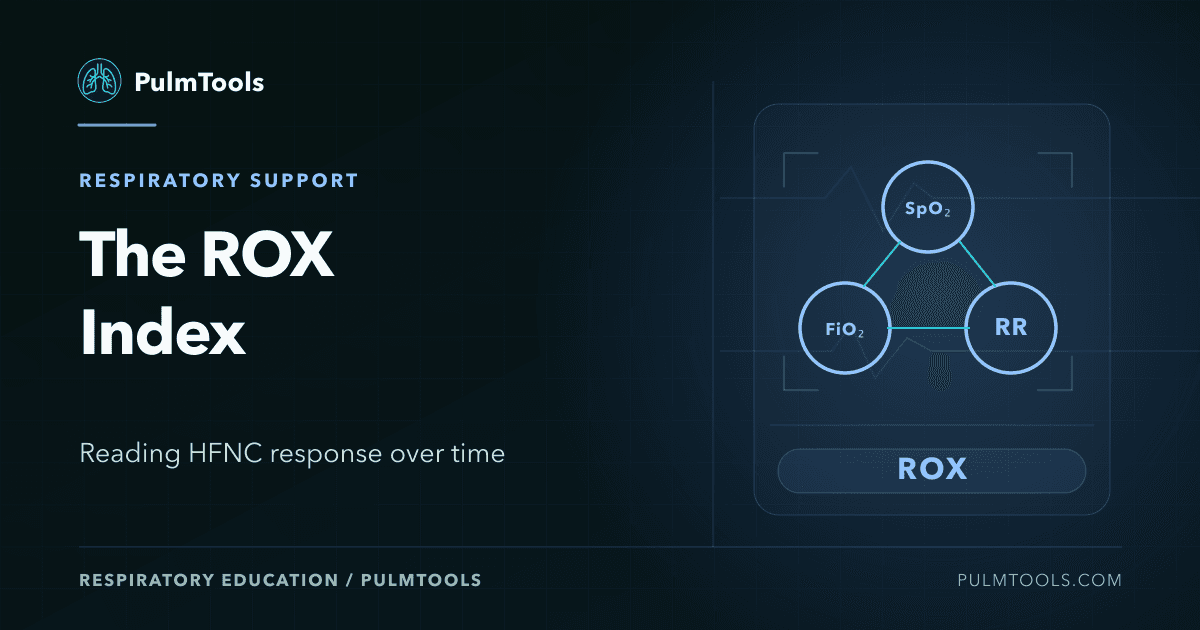
Learn how the ROX index helps assess HFNC response, estimate failure risk, and guide escalation decisions using SpO₂, FiO₂, and respiratory rate.
Learn ABG interpretation step by step with a practical bedside method for pH, respiratory vs metabolic disorders, compensation, oxygenation, and calculator support.

Learn how to use the ARDSNet PEEP/FiO₂ table, when to choose low vs high PEEP strategy, oxygenation targets, and how the protocol fits into lung-protective ventilation in ARDS.
Learn how to use an ABG calculator to interpret pH, PaCO₂, HCO₃⁻, and oxygenation. Includes step-by-step ABG analysis, compensation, and clinical examples.

Looking for an ABG Ninja alternative? Compare PulmTools with ABG Ninja and explore a more realistic ABG practice tool with stronger compensation logic, oxygenation review, and better clinical learning.
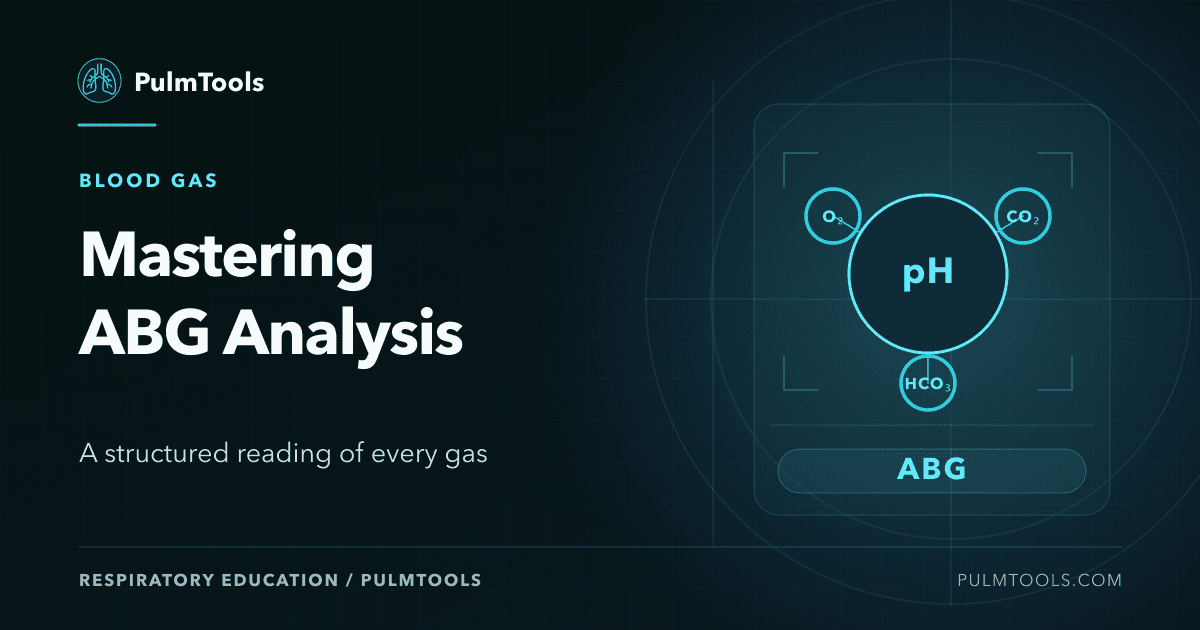
Master ABG analysis with a step-by-step guide covering pH, primary disorders, compensation, oxygenation, mixed acid-base disorders, and practice cases.
Learn the major causes of hypoxemia including V/Q mismatch, shunt, diffusion impairment, hypoventilation, and low FiO₂ with clear clinical explanations.
Download a free ABG cheat sheet and learn a fast, repeatable approach to arterial blood gas interpretation including pH, CO₂, HCO₃⁻, compensation, and oxygenation.

Learn how to calculate and interpret the A–a gradient, what is normal, and how it helps identify causes of hypoxemia like V/Q mismatch, shunt, and diffusion impairment.
Move from a guide to a calculator or practice case when you're ready.