Free ABG Ninja Alternative With Realistic Cases and Instant Feedback
Looking for an ABG Ninja alternative? PulmTools offers a more complete ABG practice experience with realistic acid-base logic, oxygenation classification, compensation training, and clinically believable arterial blood gas cases. It also connects directly into a much larger PulmTools suite of respiratory calculators, interpretation tools, oxygenation resources, ventilation tools, and clinician-focused guides.
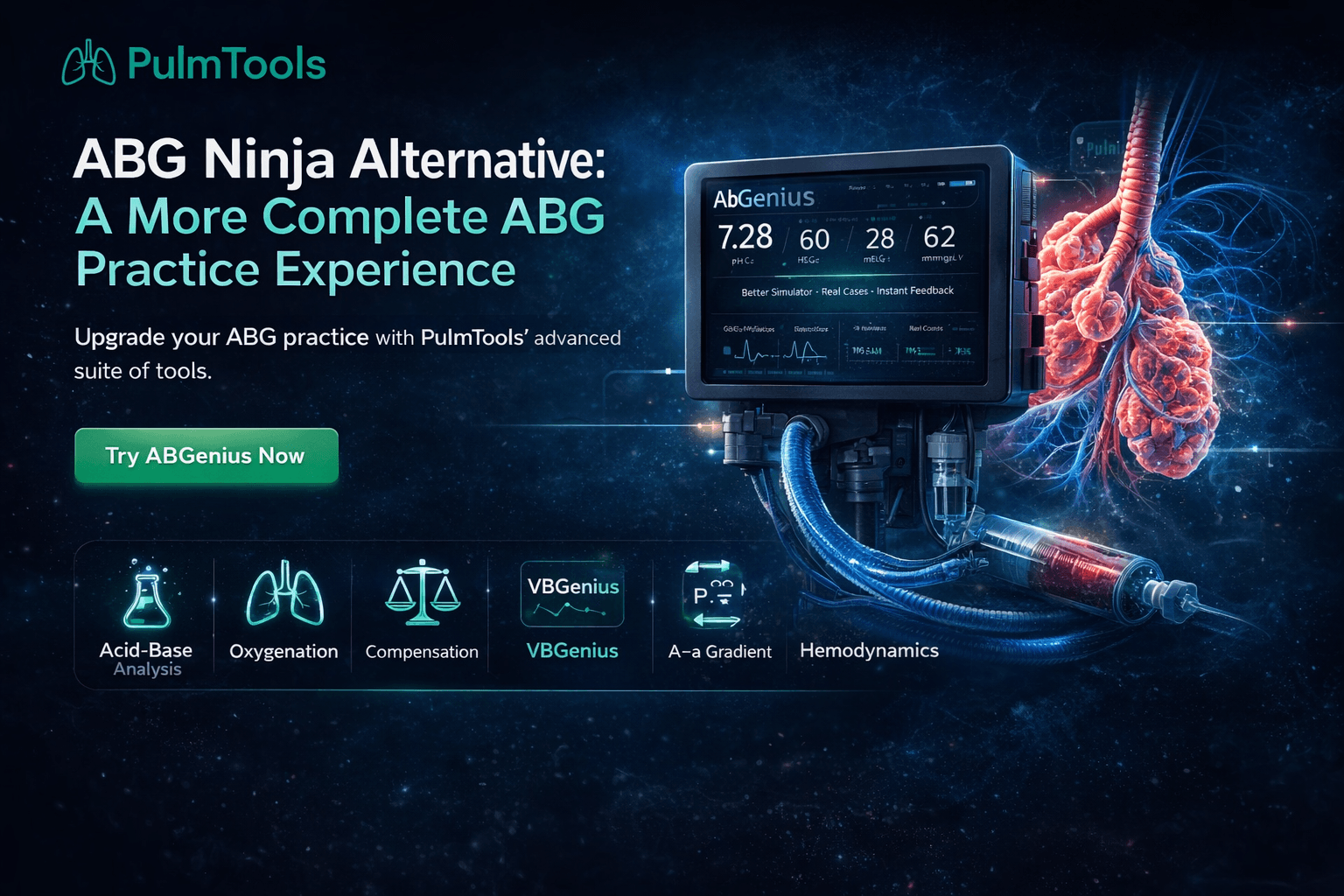
Try a More Complete ABG Practice Simulator
Practice with realistic ABGs, proper compensation logic, full oxygenation interpretation, and direct access to the broader PulmTools clinical tool suite.
Used by respiratory therapists, students, and ICU clinicians
More Than Just an ABG Tool
PulmTools isn’t just an ABG simulator — it’s a growing clinical toolkit designed for respiratory therapists, students, and critical care clinicians. Everything is built to connect together, so you can move from interpretation to deeper understanding without leaving the platform.
Each tool is designed to reinforce real clinical thinking — not just memorization.
ABG Ninja vs PulmTools ABG Practice
ABG Ninja
- • Helpful for quick ABG practice and simple repetition
- • Familiar for learners who want a lightweight quiz-style format
- • Best suited to straightforward practice sessions
PulmTools ABG Practice
- • Real clinical ABG patterns including COPD, DKA, and mixed disorders
- • Accurate compensation modeling and oxygenation classification
- • Instant feedback with stronger clinical interpretation context
- • Connected to a much larger PulmTools ecosystem of ABG, VBG, oxygenation, ventilation, and ICU tools
Learn ABG Interpretation Faster
Frequently Asked Questions
What is ABG Ninja?
ABG Ninja is a well-known ABG practice resource used by many students to review arterial blood gas interpretation in a quick quiz-style format.
What is the best ABG Ninja alternative?
PulmTools is a strong ABG Ninja alternative for learners who want realistic cases, deeper clinical context, and access to a much broader suite of respiratory and critical care tools.
Why use a simulator instead of memorizing?
Simulation builds real clinical reasoning, not just memorization.