ABG Study Tools
ABG Cheat Sheet (Free Download)
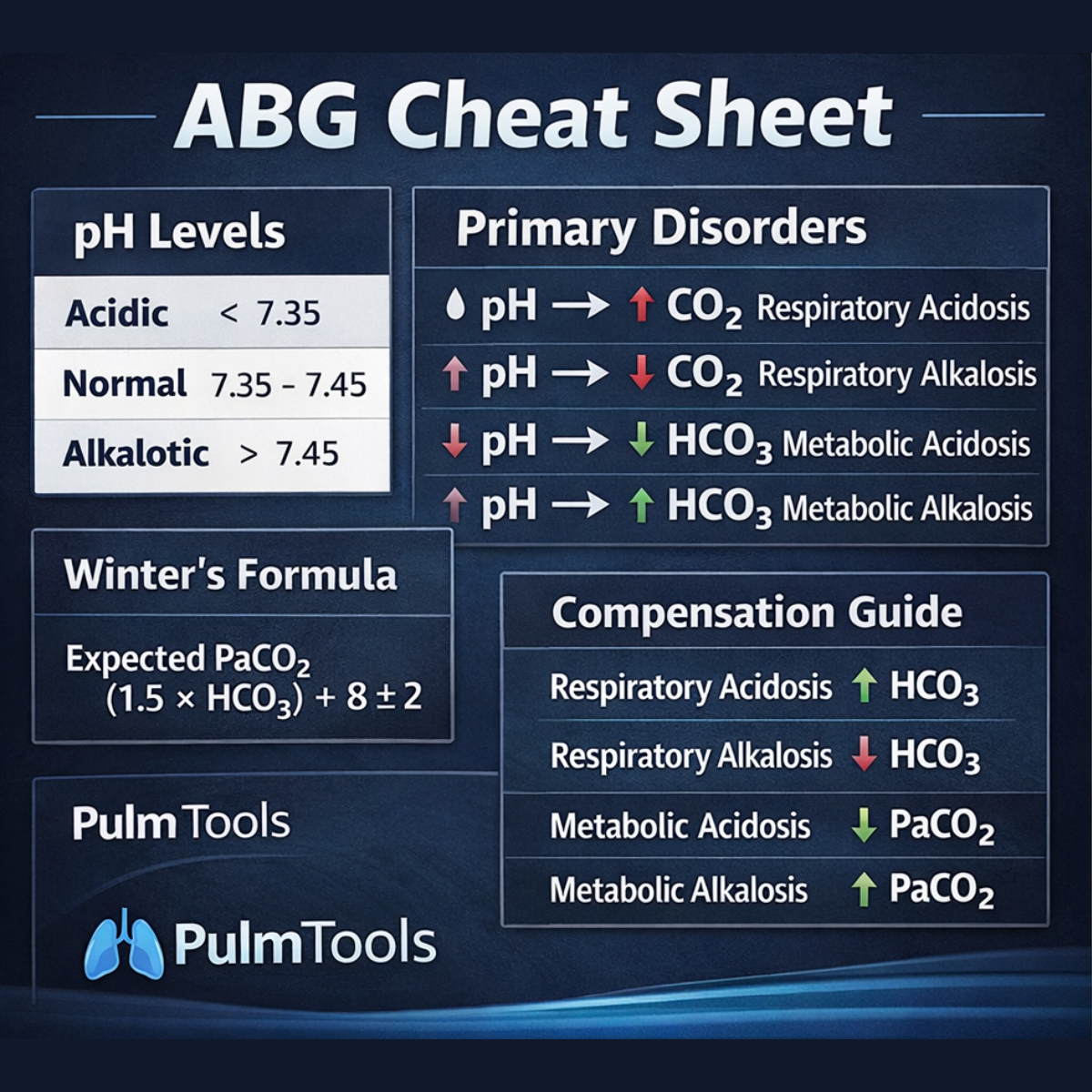
This ABG cheat sheet is designed for respiratory therapy students, nursing students, ICU learners, and clinicians who want a fast, reliable way to interpret arterial blood gases. It gives you the exact bedside framework you should memorize: check the pH, decide whether the primary problem is respiratory or metabolic, assess compensation, and then evaluate oxygenation.
This page is intentionally tied into the rest of the PulmTools ABG/VBG cluster. After you download the cheat sheet, work through the full ABG Interpretation Guide, then reinforce compensation with Winter's Formula, Respiratory Compensation, and Mixed Acid-Base Disorders.
Download the ABG Cheat Sheet
Use the PDF as a quick reference during study sessions, simulation practice, and bedside review. The goal is to make your ABG interpretation process faster, cleaner, and more automatic.
Best paired with ABGenius practice cases and the full step-by-step ABG guide.
What the Cheat Sheet Includes
- Normal ABG ranges for pH, PaCO₂, HCO₃⁻, and PaO₂
- Fast respiratory vs metabolic interpretation logic
- Compensation reminders
- Winter's Formula for metabolic acidosis
- Basic oxygenation checkpoints
- Patterns that suggest mixed disorders
If you also want the venous side of the picture, pair this with VBG vs ABG, VBG Interpretation, and Normal VBG Values.
Step-by-Step ABG Method
- Check the pH first to decide acidosis vs alkalosis.
- Use PaCO₂ and HCO₃⁻ to identify the primary disorder.
- Check whether compensation fits the expected pattern.
- Review oxygenation using PaO₂, P/F ratio, and A–a logic when needed.
For deeper oxygenation interpretation beyond the cheat sheet, use the P/F Ratio guide, the A–a Gradient guide, and Causes of Hypoxemia Explained.
High-Yield Rules to Memorize
Winter's Formula
Expected PaCO₂ = (1.5 × HCO₃⁻) + 8 ± 2
Respiratory Compensation
Acute vs chronic respiratory disorders change HCO₃⁻ differently. Always compare expected compensation to the actual bicarbonate.
These are expanded in Winter's Formula Explained and Respiratory Compensation Explained.
How Students Should Use This Cheat Sheet
Memorize the sequence, then use practice cases until it feels automatic. The cheat sheet is not the end goal — pattern recognition is.
- Use the cheat sheet to learn the process
- Use ABG practice questions to reinforce the process
- Use the deeper posts to understand why the rules work
Start with the cheat sheet, then move into ABGenius. That is the fastest route to fluency.
FAQ
What should an ABG cheat sheet include?
A good ABG cheat sheet should include normal ranges, respiratory vs metabolic logic, compensation rules, Winter's Formula, and basic oxygenation interpretation.
Is an ABG cheat sheet enough to learn ABGs?
It is a great starting point, but students should also practice cases and learn the deeper reasoning behind compensation and mixed disorders.
Where can I practice after downloading the cheat sheet?
Practice with the PulmTools ABGenius tool and then work through the linked ABG/VBG guides.