What Is PRVC? Pressure Regulated Volume Control Explained
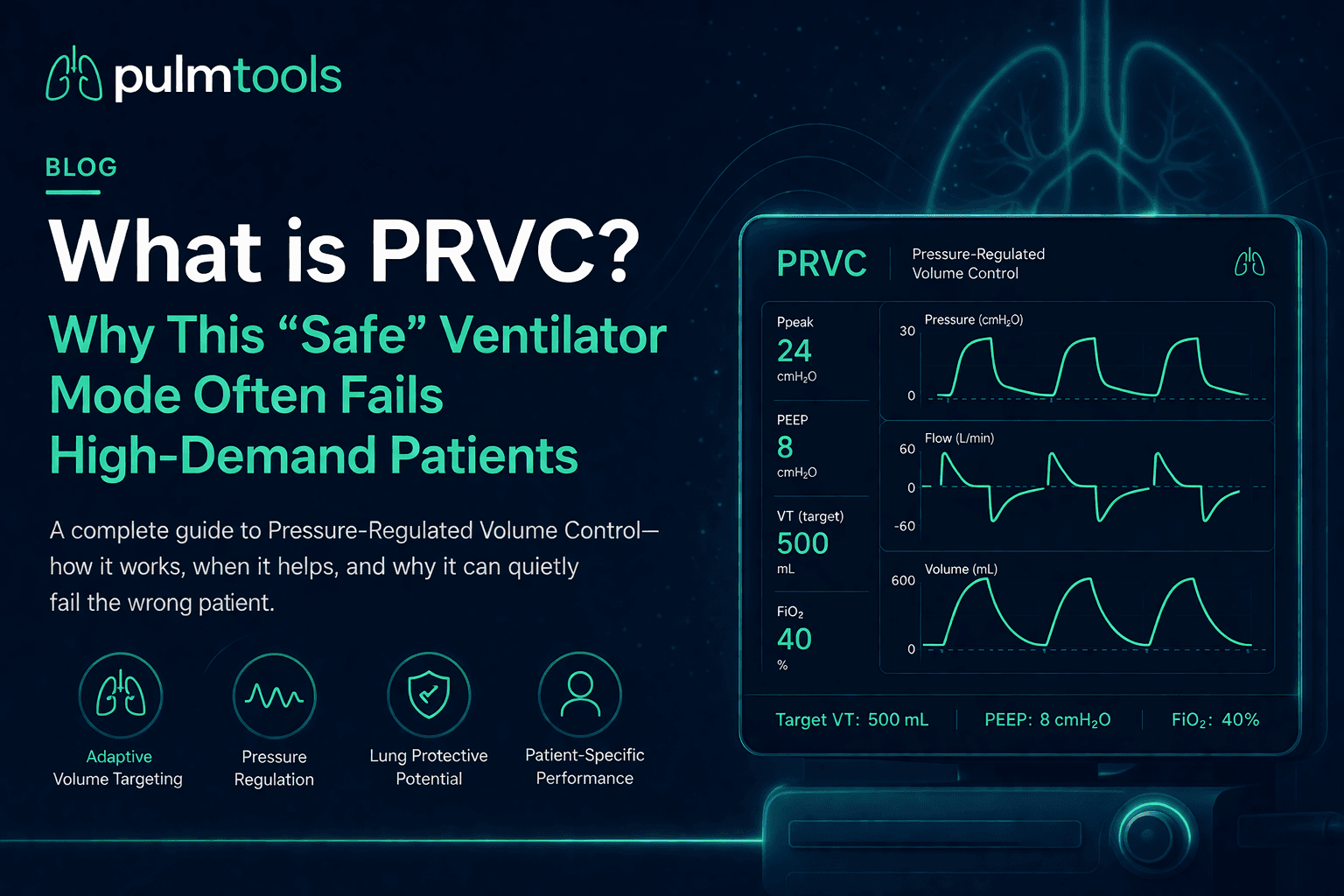
Learn how PRVC works, why pressure regulated volume control is a hybrid adaptive ventilator mode, where it helps, where it fails, and how to recognize PRVC failure at the bedside.
Evidence-based posts for clinicians and students covering ABG and VBG interpretation, breathwork, COPD, oxygenation, ventilation, and respiratory education.
Use the PulmTools blog to go deeper on the same topics covered in our calculators, simulators, and bedside tools, with practical clinical explanations and student-friendly breakdowns.
Jump straight from PulmTools articles into the calculators and simulators that match the same topic cluster. This makes the blog feel more like a clinical resource hub instead of a simple post archive.
Showing a compact tag index by default to keep the page clean.
305 tags available across the PulmTools blog.
Filtered posts based on your current search or tag.

Learn how PRVC works, why pressure regulated volume control is a hybrid adaptive ventilator mode, where it helps, where it fails, and how to recognize PRVC failure at the bedside.

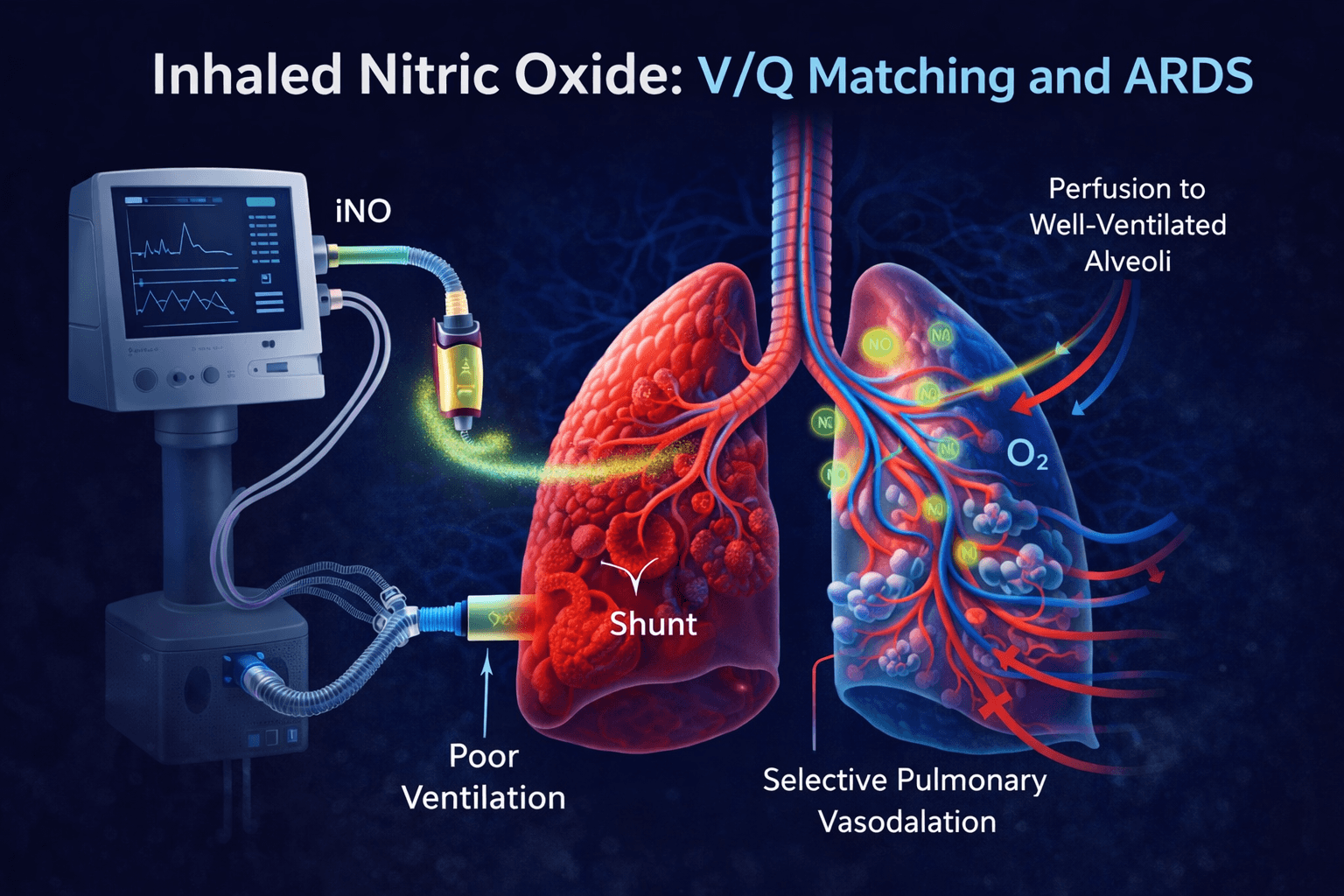
A clinician-focused guide to inhaled nitric oxide covering the one evidence-based indication, ARDS physiology, V/Q matching, and common off-label uses in critical care.

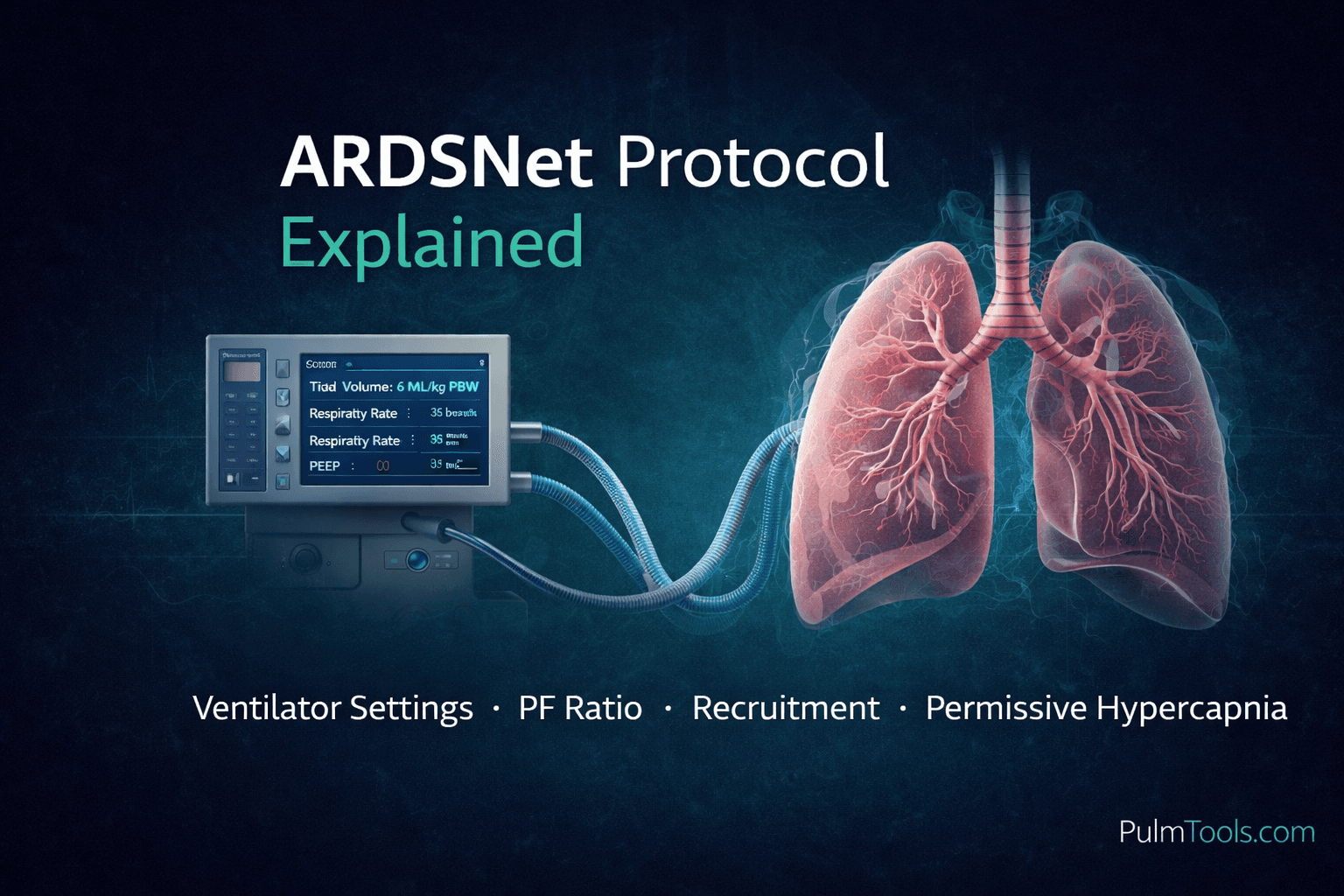
Learn the ARDSNet protocol step by step including low tidal volume ventilation, plateau pressure limits, PEEP/FiO2 strategy, and permissive hypercapnia in a practical ICU guide.

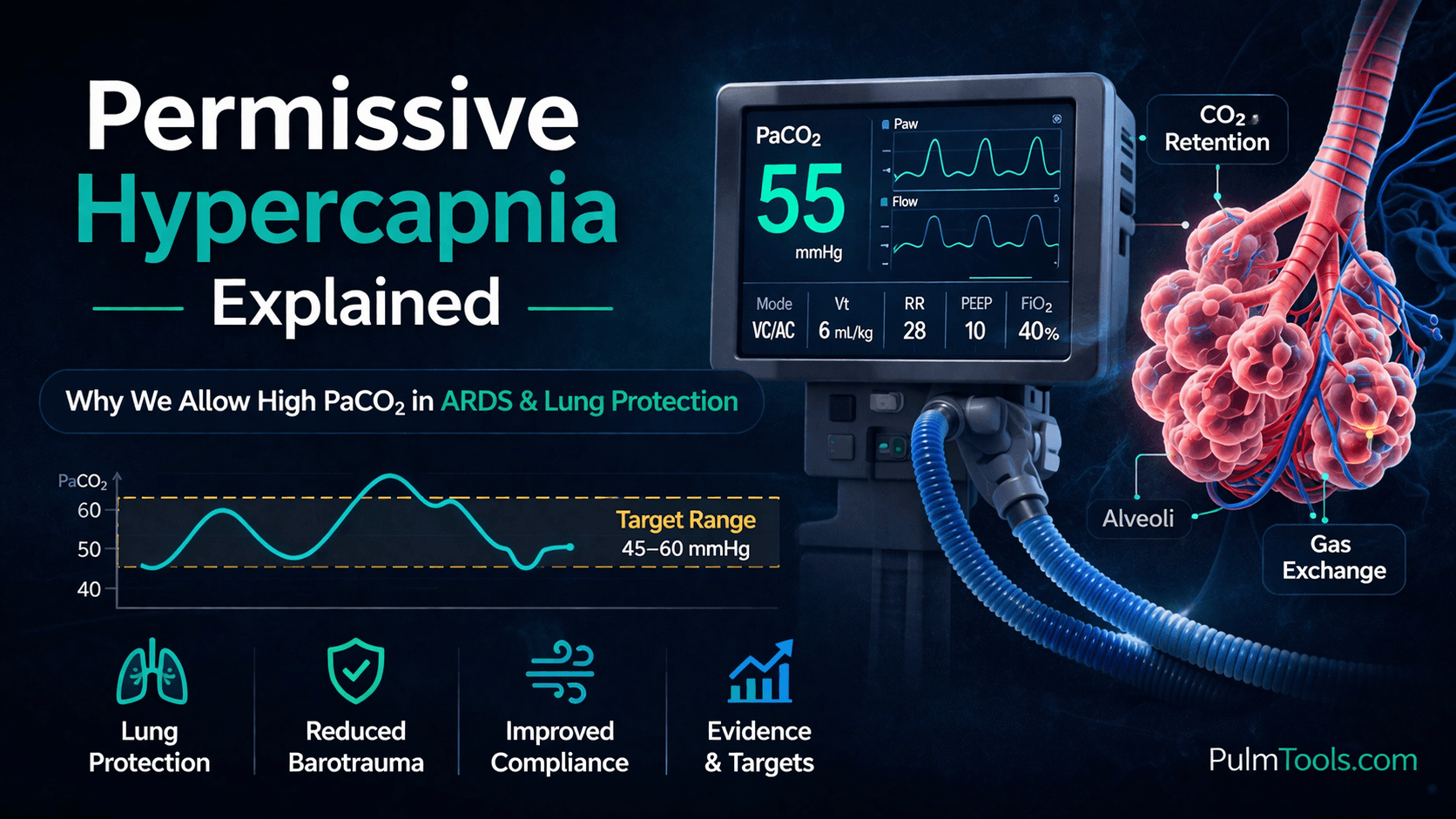
Learn permissive hypercapnia in ARDS and critical care, including why clinicians accept higher PaCO₂, when it is used, pH targets, risks, and bedside ventilator strategy.

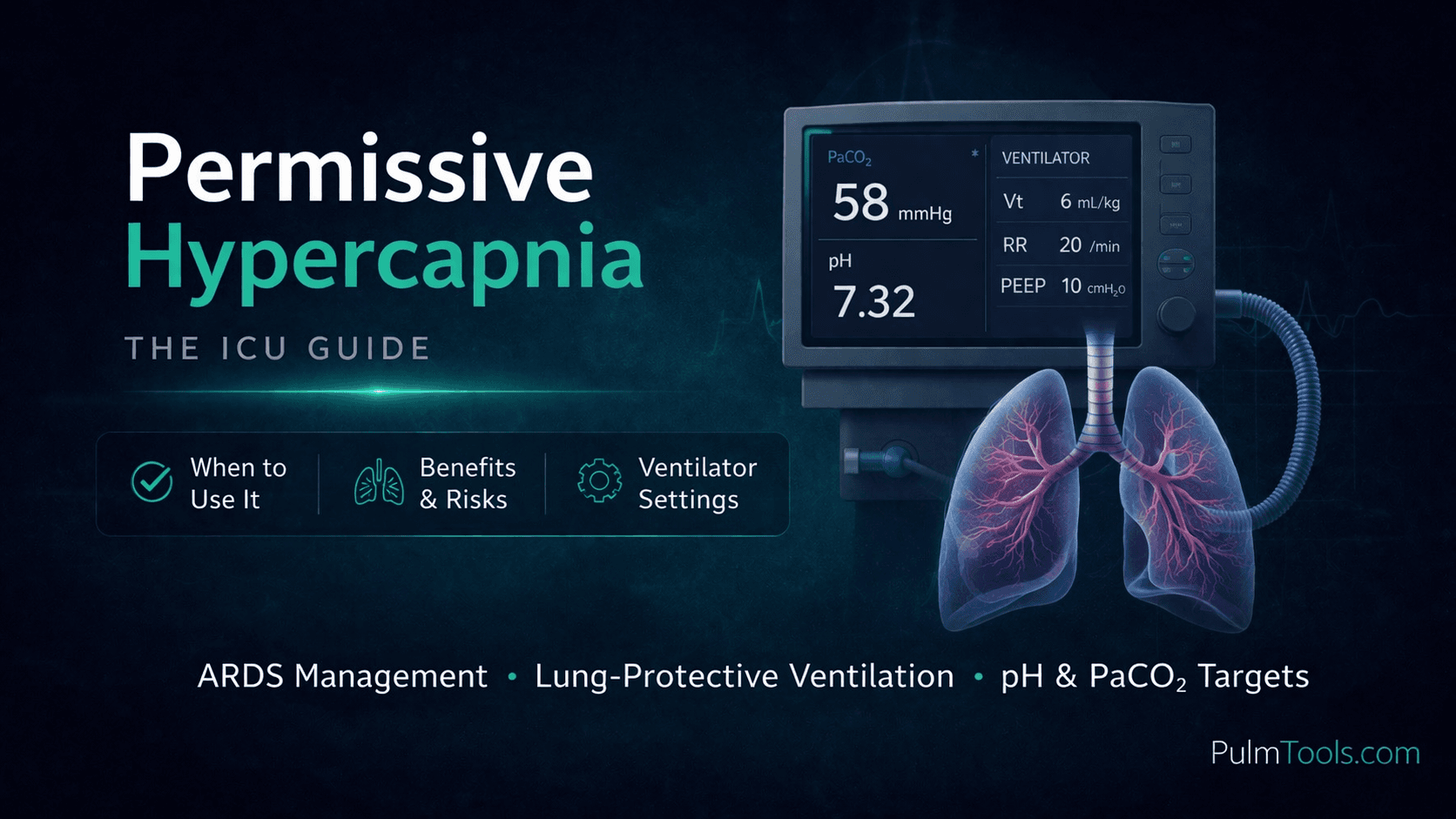
A practical ICU guide to permissive hypercapnia including pH thresholds, PaCO₂ targets, ventilator adjustments, risks, and ARDS lung-protective strategy.

Learn how to calculate and interpret the P/F ratio with ARDS severity, bedside examples, and clinical use cases.

Evidence-based comparison of indications, parameters, and outcomes with AARC & ATS guidance.

Who benefits from 0.9%, 3% and 7% saline, who shouldn’t receive it, dosing, device choice, and monitoring across CF, bronchiolitis, bronchiectasis, COPD/asthma, and ICU.