VBG Calculator & VBG Analyzer
Enter pH, PvCO₂, and HCO₃⁻ to quickly interpret venous blood gas results, identify acid-base disorders, and assess compensation patterns.
Enter VBG values
Use pH, PvCO₂, and HCO₃⁻ values from the same venous sample. Reference ranges are shown as entry hints.
VBGenius
Want to practice instead of analyze?
VBGenius generates venous blood gas interpretation challenges with instant feedback, compensation training, and pattern-recognition drills designed for RTs, RNs, NPs, PAs, MDs, and students.
Venous acid-base status
Use pH, PvCO₂, and HCO₃⁻ to quickly organize VBG results into respiratory, metabolic, compensated, or mixed patterns.
ABG vs VBG context
Great for acid-base screening and trending while keeping clear that arterial oxygenation requires ABG data when precision matters.
Built for repetition
Pair the VBG analyzer with VBGenius practice questions to build fast venous blood gas pattern recognition.
Founders Access · Limited time
Founder Premium, free for life on iOS + Android.
Quick decision support in the moment. Real trends, real time.
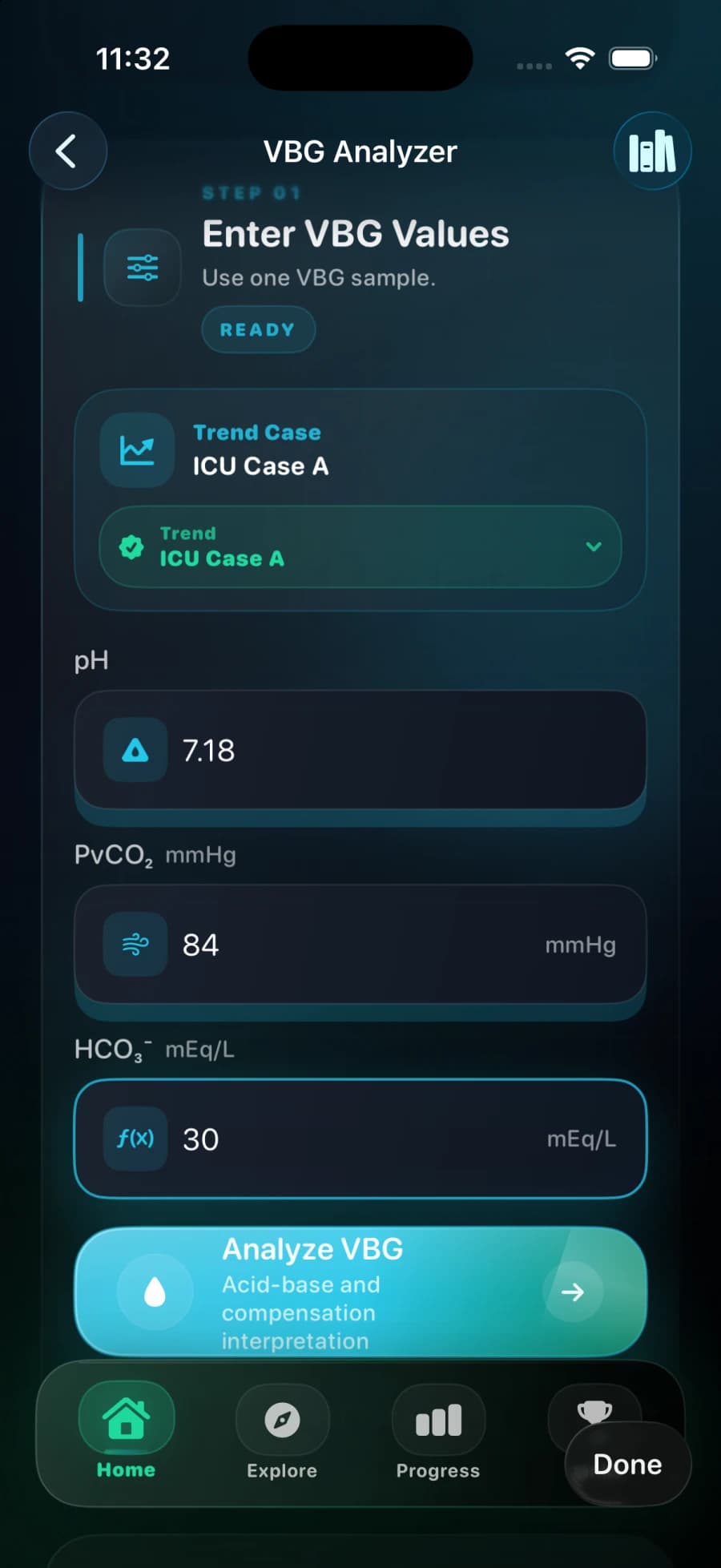
VBG Analyzer
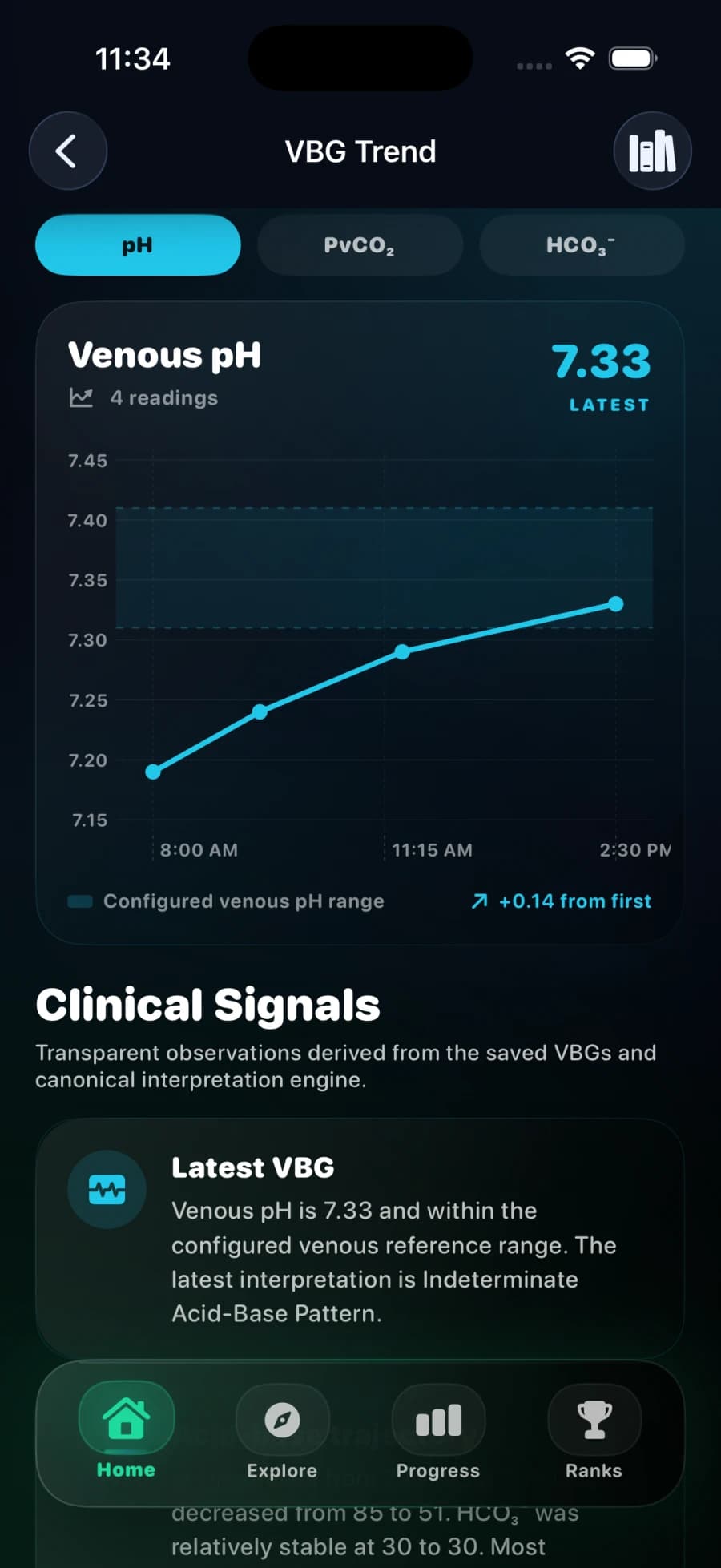
VBG Trend
VBG interpretation workflow
How to use this VBG analyzer
Use this VBG calculator when you already have venous blood gas values and want a fast, organized acid-base interpretation. Enter pH, PvCO₂, and HCO₃⁻, then review the likely disorder and compensation pattern together.
- Start with pH to decide whether the venous gas suggests acidosis, alkalosis, or a normal-range pH.
- Compare PvCO₂ and HCO₃⁻ to determine whether the primary pattern is respiratory, metabolic, or mixed. When the pattern suggests metabolic acidosis, check whether the CO₂ response is appropriate rather than assuming every low PvCO₂ is a primary respiratory alkalosis.
- Use VBG results for acid-base screening and trending, but use ABG when precise arterial oxygenation data are needed.
For deeper study, read the VBG Interpretation Guide or practice repeated cases with the VBG interpretation quiz.
Related tools & guides
Keep building acid-base confidence
Transparent interpretation with clear limits
The VBG calculator compares venous pH, PvCO₂, and HCO₃⁻ with the stated reference ranges, then evaluates their direction together to identify a likely acid–base pattern. It uses cautious language when the entered values do not establish a single clear process.
- Compensation direction is not presented as proof that compensation is quantitatively appropriate.
- VBG interpretation does not replace arterial oxygenation assessment or the full clinical picture.
Common VBG questions
VBG calculator FAQ
Quick answers for students, respiratory therapists, nurses, and clinicians reviewing venous blood gas interpretation.
What is a VBG calculator?
A VBG calculator helps interpret venous blood gas values such as pH, PvCO₂, and HCO₃⁻ to identify acid-base status, primary disorder, and compensation patterns.
What are normal VBG values?
Common normal VBG ranges are pH 7.31–7.41, PvCO₂ 41–51 mmHg, and HCO₃⁻ 22–29 mEq/L.
Can a VBG replace an ABG?
A VBG is often useful for acid-base screening and trending, but it does not replace an ABG when accurate arterial oxygenation data such as PaO₂ are needed.
How do you interpret a VBG?
Start with pH, compare PvCO₂ and HCO₃⁻ to identify the primary disorder, then assess whether compensation fits the pattern.